
Your data on MRCVSonline
The nature of the services provided by Vision Media means that we might obtain certain information about you.
Please read our Data Protection and Privacy Policy for details.

In addition, (with your consent) some parts of our website may store a 'cookie' in your browser for the purposes of
functionality or performance monitoring.
Click here to manage your settings.
If you would like to forward this story on to a friend, simply fill in the form below and click send.

Your friend's email:
Your email:
Your name:
 
 
Send Cancel

Baby bats babble like human infants - study
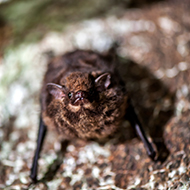
Researchers at Berlin’s Museum of Natural History studied the babbling behaviour of 20 greater sac-winged bat pups.
Pup babbling is rhythmic and involves the repetition of key syllables.

A new study by researchers in Germany has revealed that baby bats babble much like infant humans.

The study, published in the journal Science, found that bat pup babbling is rhythmic and involves the repetition of key syllables, similar to da-da-da in human babies.

"Pup babbling is a very conspicuous vocal behaviour, it is audible at a considerable distance from the roost, and babbling bouts have a duration of up to 43 minutes,” said study author Martina Nagy. “While babbling, pups learn the song of the adult males."

In the study, researchers at Berlin’s Museum of Natural History studied the babbling behaviour of 20 greater sac-winged bat pups in their natural habitat. They took daily acoustic recordings of the bats in their roosts and filmed the pups from birth until weaning.

The team then analysed the recordings to investigate the characteristics of pup babbling, and found that pup babbling is characterized by the same eight features as human infant babbling. “For example, pup babbling is characterized by reduplication of syllables, similar to the characteristic syllable repetition – /dadada/ – in human infant babbling," explained co-author Lara Burchardt.

Reseacrhers also found that pup babbling is rhythmic and occurs in both male and female pups – a discovery that stands in stark contrast to songbirds, where only young males babble.

Co-author Mirjam Knörnschild said: "It is fascinating to see these compelling parallels between the vocal practice behaviour of two vocal learning mammals.

“Our study is contributing to the interdisciplinary field of biolinguistics, which focusses on the biological foundations of human language to study its evolution. Work on a vocal learning, babbling bat species may ultimately give us another piece of the puzzle to better understand the evolutionary origin of human language.”

Become a member or log in to add this story to your CPD history

FIVP publishes CMA Compliance Checklist

News Story 1
 FIVP has published a CMA Compliance Checklist to support independent practices with the Market Investigation Order.

The document includes deadlines for small and large businesses, with tick boxes for each of the tasks. The organisation also invites practices to contact them for support with requirements.

Rita Dingwall, FIVP chair, said: FIVP appreciates that navigating the new CMA requirements can feel daunting. We hope this checklist will make things a little easier, helping independent practices work through what is required with confidence. 

Click here for more...
News Shorts
APHA launches free virtual work experience programme

The Animal and Plant Health Agency (APHA), in collaboration with Springpod, has launched a free virtual work experience programme, giving young people across the UK the chance to explore careers dedicated to protecting animal and plant health.

The on-demand programme offers a unique insight into career opportunities within APHA, showcasing how students can contribute to tackling some of the UK's most critical biosecurity and environmental challenges.

Designed for students aged 13 and over, the course includes more than 10 hours of engaging content featuring real-life industry insights, scenario-based challenges, and practical guidance on applying for jobs. To register for the course, visit the APHA website.

