


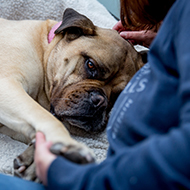
Guidance formally recognises economic abuse involving pets.
National rehoming charity Dogs Trust has welcomed new legislation that recognises the use of pets in domestic abuse.
Dogs Trust outreach project manager Amy Hyde said the charity was “delighted” with the newly-released Domestic Abuse Act Guidance, and will continue to raise awareness about how dogs can also be used in abuse.
“Every day we see the devastating impact that economic abuse has on the dogs that we foster, as well as the emotional distress that it causes their owners, so we are delighted that this type of behaviour involving pets has been included in the Domestic Abuse Act guidance,” she said.
“Often perpetrators will withhold funds for vital veterinary care or dog food, controlling every expenditure.”
The new Domestic Abuse Act formally recognises that control of a person’s financial situation - impacting their ability to care for a pet - constitutes economic abuse, a form of domestic abuse.
Through the Dogs Trust Freedom Project - a dog fostering service for people fleeing domestic abuse – the charity sees first-hand how perpetrators use dogs to coerce and control within abusive relationships.
A survey carried out by Dogs Trust revealed that 60 per cent of professionals who work in the domestic abuse sector were aware of cases where pets, or an owner's ability to care for a pet, had been impacted by financial abuse.
A domestic abuse survivor who accessed the Freedom Project said: “My ex-partner would say there was no money left at the end of the month, which I believed at the time. I would go without food in order for the children to attend dance classes, as I didn’t want them to go without. I didn’t realise until afterwards that he actually had a number of bank accounts and was storing money elsewhere.
“I was always made to feel it was my fault that we had no money. My mum would pay for the dog food so that they didn’t go without. I fed them on an expensive brand, and I was frightened to let him know how much the food was in case he got rid of the dogs or made me feed them poor quality food.”
Pets can be a significant factor in people not being able to escape domestic abuse for fear of what may happen to their companions if they are left behind, the charity says.
As many refuges cannot accept animals, the Freedom Project offers dog owners a vital lifeline to escape abuse. The service also provides foster homes for dogs, covering all the necessary expenditures and enabling survivors to access safe accommodation.
Photos © Richard Murgatroyd Photography


 Veterinary practices are being urged to help owners safely dispose of any unused and expired pet medicines - not just antibiotics - during November's Animal Medicines Amnesty.



