


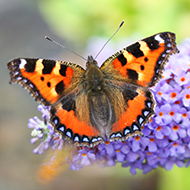
Public urged to contribute towards a better understanding of butterfly and moth populations.
The Big Butterfly Count 2021 is getting underway, with conservationists appealing for help after unseasonably cold and wet weather.
Using the free Big Butterfly Count app, members of the public are being asked to contribute towards a better understanding of butterfly and moth populations, by counting the amount of winged wonders they see in their gardens.
The project was launched at Winchester Science Centre on Friday (16 June) by UK charity Butterfly Conservation and its vice-president and wildlife broadcaster, Chris Packham.
“Biodiversity and climate crisis is an urgent issue and it can be overwhelming to think about what we can do as individuals to really make a difference,” said Chris. “Because butterflies and moths make excellent indicators of the impacts of climate change and other human environmental factors, collecting data on their numbers is really important.
“Something as simple as recording a butterfly spotted in your garden, at your local park or on your window box can play a part in vital research into a global problem. It’s a really valuable contribution everyone can make.”
According to Butterfly Conservation, many butterfly species experienced a poor spring or a delay in their emergence following 2021's unseasonably cold and wet weather. One species that was particularly low in numbers was the speckled wood, but the small tortoiseshell, comma, green-veined white, large white and red admiral were also down in abundance.
Big Butterfly Count's three-week citizen science event is open to everyone of any age, living in towns, cities or the countryside. Participants are asked to spend 15 minutes in an outdoor space, counting the amount and type of butterflies and moths they see.
Last year saw a record 145,000 counts submitted to the campaign - but also saw the lowest average number of butterflies logged in its 12-year history. Scientists at Butterfly Conservation are keen to see if if this trend continues into 2021.
“The Big Butterfly Count, along with our other research work, is already showing us changes in the populations of our butterflies and moths," commented Dr Zoë Randle, a senior surveys officer at Butterfly Conservation. "Climate change and other human-led impacts are causing some species to be found in new areas, while others are becoming harder to find in the UK at all."
She added: “We really need the public’s help to understand what is happening to our butterfly and moth populations. It’s a small but crucial thing everyone can do. This information will not only help us to protect these species but also to inform what effect the changing climate is having on our biodiversity.”
The count is now open and runs until the 8th August. For more information and to take part, visit bigbutterflycount.org or download the free Big Butterfly Count app.


 Defra has published guidance for the vet sector ahead of a proposed UK-EU Sanitary and Phytosanitary agreement.



