


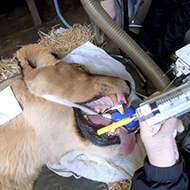
SAFIRA aims to reduce the number of people needed for anaesthesia.
A lion at Five Sisters Zoo in Scotland has become the first animal in the world to undergo dental surgery using a pioneering anaesthetic device developed by clinicians in the NHS.
Susan Thorne from DentalVets carried out a root canal and two dental extractions on ‘Boss’ using the SAFIRA tool, created by four consultant anaesthetists at The Queen Elizabeth Hospital Kings Lynn Foundation Trust in Norfolk.
Working with Cambridge-based firm Medovate, the clinicians hope to bring the device to market to make anaesthesia more autonomous for clinicians and safer for patients.
It works by delivering a slow controlled release of anaesthesia to support the visualisation of anaesthetic spread and can therefore support less anaesthetic being used to achieve the desired result.
Its developers hope it will transform anaesthesia into a one-person procedure - removing the need to communicate with an assistant and the inconsistency of an untrained hand. The device also lowers the risk of nerve injury by incorporating a unique built-in safety mechanism that limits injection pressure.
Adele Copland, operations supervisor at Five Sisters Zoo said: "Striving to give our rescued lions the best care we can at Five Sisters Zoo, we were happy to try this new way of reducing any mouth discomfort they may have had after their specialist dental treatment. Sadly they arrived here with damaged teeth from their mistreatment at the circus from which they were confiscated in Belgium. They have bounced back wonderfully after their treatment and are back to normal."
Chris Rogers from Medovate commented: “This is an amazing story of how an idea developed by NHS consultants is not only helping human patients globally, but it is also making regional anaesthesia safer for animals as well. There are a significant number of regional anaesthesia blocks completed in veterinary practice per annum globally, so potentially this NHS developed device could play a major role in the future of veterinary practice worldwide.”
Image (C) Medovate.


 A nationwide roadshow offering free, personalised parasite risk assessments and flea and tick checks will be visiting popular dog events across the UK.



