


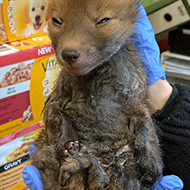
Scottish SPCA rescues fox cub from trap with seriously damaged fur and skin.
The Scottish SPCA (SSPCA) has reiterated its long-standing call for a ban on glue traps after rescuing a fox cub that found itself stuck in one overnight.
The animal charity was called out on the morning of 10 April by a member of the public, who had heard the cub crying out in pain.
It took inspectors hours to free the cub, named Sticky, from the adhesive, using a mixture of fairy liquid, vegetable oil and soapy water, although they had to shave off some of its matted fur.
Because Sticky's skin and fur was so badly damaged, the charity initially said that its prognosis was not looking good, but thankfully the cub is now on the mend. Sticky will spend the next few months recuperating at the SSPCA’s National Wildlife Rescue Centre in Fishcross before being released back into the wild.
Wildlife manager Steve Gray said: “The prognosis for Sticky wasn’t good. The glue trap had seriously damaged his fur and skin. The team spent hours treating him on arrival and their efforts have really paid off. Now, he’s a happy, playful baby fox who is getting on well with the other cubs we’ve grouped him with.
“In a few months, we will release Sticky at a suitable release site where we hope he will have a long, happy life in the wild.”
The incident has prompted the SSPCA to reiterate its call for a ban on glue traps to deter vermin. The devices usually consist of cardboard or plastic covered in adhesive, designed to entrap mice or rats that walk over them.
Chief superintendent Mike Flynn said: “We understand a pest control firm supplied the address with glue traps to deter vermin. Shockingly, glue traps are still legal in the UK. This poor fox cub’s lucky escape is further proof that they are an ineffective form of pest control.
“The Scottish SPCA has long advocated a total ban on glue traps. Thankfully, our brilliant rescuer and wildlife team have been able to save and care for Sticky, but many other wild animals aren’t so lucky.”
Image (C) Scottish SPCA


 Companies marketing medicines for small pets exempt from authorisation must submit their annual return to the Veterinary Medicines Directorate (VMD) by 30 November 2026.



