


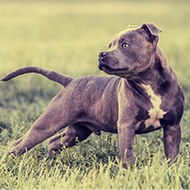
DLV2 variant may also affect development of the heart.
A recent study from the University of Helsinki has revealed new insights into the impact of a DVL2 gene defect on canine health. This gene variant is already associated with a screw tail and has become widespread in English bulldogs, French bulldogs and Boston terriers as a result of inbreeding.
Julia Niskanen from the University of Helsinki and the Folkhälsan Research Center said: “In this study, we wanted to further investigate the frequency of the DVL2 variant in different dog breeds and determine its effects on skeletal development.
The DVL2 variant was identified in all of the English bulldogs, French bulldogs and Boston terriers in the study, however, both the variant and the normal form were found in the American Staffordshire terriers, Staffordshire bull terriers, dogues de Bordeaux, olde English bulldogs and American bulldogs.
Using computed tomography scans, researchers analysed the skeletal anatomy of American Staffordshire bull terriers of different genotypes, in order to determine the effect of the variant gene on body shape. They found that the presence of the DVL2 gene defect commonly resulted in caudal vertebrae 'anomalies'.
“Tail abnormalities in the American Staffordshire terriers were less severe than the screw tails typically seen in English bulldogs, French bulldogs and Boston terriers,” added Vilma Reunanen from the University of Helsinki's Faculty of Veterinary Medicine.
“In contrast to the previous study, we did not find an association between the DVL2 variant and thoracic vertebral anomalies.”
Researchers also found that the muzzles of dogs that carry two copies of the gene defect are significantly shorter. Similarly, dogs with one copy of the defect have shorter muzzles than dogs that don’t carry any copies of the gene defect.
Several of the dogs with two copies DVL2 variant were found to have a congenital heart defect. However, researchers state that this finding requires further study.
Many of the breeds that carry the DVL2 variant also have other genetic variants that affect body shape. The study affirmed that the combined effects of these defects may result in 'serious health problems'.


 The University of Glasgow is seeking participants for a new study into vet professionals nutrition-related knowledge, competence and decision-making.




