


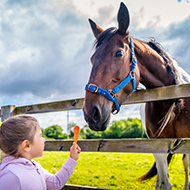
Survey shows inappropriate feeding can lead to serious illness or even death
The British Horse Society (BHS) and The University of Bristol Veterinary School are asking members of the public not to feed horses while spending time outdoors, following the startling results of a recent survey conducted by the School.
The survey was completed by 1,017 people in 2020. More than three quarters of horse owners surveyed found that their horses were fed without their permission, and more than 50 per cent said that this had occurred more frequently since the first lockdown.
It was also revealed that almost one third of horses became unwell as a result of inappropriate feeding, and half of these needed veterinary treatment.
Sadly, nearly a third of the horses that required treatment did not make a full recovery and 16 per cent died or were euthanised.
Gemma Stanford, director of welfare at The British Horse Society, said: "The BHS is urging members of the public to take notice of our #BeHorseAware campaign and not feed horses in fields as this can cause serious, potentially life-threatening illness.
“We believe many people act with no malicious intent and at this time of year members of the public think that they are helping a hungry horse. However, they are unaware of the timings at which owners feed their horses and the risks that certain foods or grass cuttings can pose.
“If members of the public feel that a horse is being mistreated or underfed, we would ask them to contact the BHS welfare helpline for advice.”
The BHS launched its #BeHorseAware campaign in April 2020, to raise awareness about the negative affects of inappropriate feeding. It has also produced free signs for horse owners to use which warn the public not to feed their horses.


 Two independent vets have launched a podcast to help owners strengthen their bond with pets. Dr Maggie Roberts and Dr Vanessa Howie, who have worked in both veterinary practice and major charities, are keen to use their experience to enable people to give pets a better life.



