
Your data on MRCVSonline
The nature of the services provided by Vision Media means that we might obtain certain information about you.
Please read our Data Protection and Privacy Policy for details.

In addition, (with your consent) some parts of our website may store a 'cookie' in your browser for the purposes of
functionality or performance monitoring.
Click here to manage your settings.
If you would like to forward this story on to a friend, simply fill in the form below and click send.

Your friend's email:
Your email:
Your name:
 
 
Send Cancel

Feline obesity problem worsening during pandemic
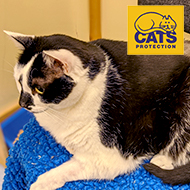
Five-year-old Paisley (pictured) was brought to Cats Protection last year at double her recommended weight.

More than 3 million UK cats are already overweight

Charity Cats Protection has expressed concern over the rising obesity problem among cats, which, it says, has continued to worsen across the COVID-19 pandemic.

In it's latest CATS report – carried out before the pandemic – Cats Protection found that more than 3.2 million owned cats were overweight.

In a more recent survey of more than 2,000 cat owners, 28 per cent said that they had overfed their pet since the start of the first lockdown in March 2020.

More than a third of owners (36 per cent) also said that their cat often visited a neighbour for extra food.

Overall, 20 per cent of owned cats had gained between one and 2.25 kilos in weight.

Maggie Roberts, director of veterinary services for Cats Protection, said: “This survey suggests the extra time we’ve spent indoors with our cats has led to us over-indulging them, which owners did out of love or to make their feline feel like a family member.

“Sadly we are doing them more harm than good as overweight cats are at significant risk of diabetes, joint problems and urinary infections.”

The charity shared the story of Paisley, a five-year-old cat that weighed 10.75kgs when she was brought to Cats Protection last year.

Paisley was put on a specially prescribed diet and later adopted by James Frankland from Hove, East Sussex, who continued with her weightloss plan. Mr Frankland now feeds Paisley a diet of normal cat food and ensures she receives responsible portion sizes.

“She is now getting used to normal sizes of cat food and has lost more than three kilos,” says Mr Frankland. “Although she is still two kilos from her ideal weight, she’s already so much more agile and lively. I have no doubt it’s extended her lifespan.”

Image (c) Cats Protection.

Become a member or log in to add this story to your CPD history

New RCVS Academy courses to remove barriers in vet care

News Story 1
 The RCVS Academy has launched two courses to its new client support series, as it seeks to improve accessibility in veterinary settings.

The courses will help professionals to support assistance dog partnerships and clients with hearing loss.

The Hearing loss and Assistance dogs courses saw RCVS project lead Catherine Hemingway collaborate with the British Deaf Association and Assistance Dogs UK. Vets will gain practical guidance on supporting clients with additional needs.

Each course takes an hour to complete, and can be accessed by RCVS registrants for free. 

Click here for more...
News Shorts
APHA launches free virtual work experience programme

The Animal and Plant Health Agency (APHA), in collaboration with Springpod, has launched a free virtual work experience programme, giving young people across the UK the chance to explore careers dedicated to protecting animal and plant health.

The on-demand programme offers a unique insight into career opportunities within APHA, showcasing how students can contribute to tackling some of the UK's most critical biosecurity and environmental challenges.

Designed for students aged 13 and over, the course includes more than 10 hours of engaging content featuring real-life industry insights, scenario-based challenges, and practical guidance on applying for jobs. To register for the course, visit the APHA website.

