
Your data on MRCVSonline
The nature of the services provided by Vision Media means that we might obtain certain information about you.
Please read our Data Protection and Privacy Policy for details.

In addition, (with your consent) some parts of our website may store a 'cookie' in your browser for the purposes of
functionality or performance monitoring.
Click here to manage your settings.
If you would like to forward this story on to a friend, simply fill in the form below and click send.

Your friend's email:
Your email:
Your name:
 
 
Send Cancel

AAFP ends elective declawing procedures
Many regions throughout the world, including parts of North America, have banned declawing.

International Cat Care welcomes 'important step forward for feline welfare'.

The American Association of Feline Practitioners (AAFP) has announced that it is ending elective declawing procedures for all felines under its Cat-Friendly Practice (CFP) scheme.

AAFP rolled out the update across its CFP practices in North, Central, and South America on 1 January, and said that it will be standard in all new practices that wish to earn the designation moving forward.

The move follows several years of work alongside the International Society of Feline Medicine (ISFM), the veterinary arm of International Cat Care (iCatCare). 

Welcoming the announcement, ISFM head Nathalie Dowgray said: “ISFM is delighted this has now been achieved – it is an important step forward for feline welfare. AAFP’s Claw Friendly Educational Toolkit is a great resource for practices choosing to stop undertaking declawing.

"Both organisations will also work to educate owners around the world that scratching is a normal and essential feline behaviour, and that the procedure of declawing is definitely not cat friendly.”

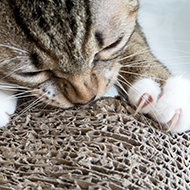
Many regions throughout the world, including portions of North America, have banned feline declawing procedures unless there is a necessary medical reason. Indeed, many cat owners are unaware that clawing is a normal feline behaviour that allows the animal to stretch and de-stress,. 

The CFP scheme was established by the AAFP and the ISFM as part of a global initiative to improve feline welfare. A CFP designation is a recognised symbol of excellence showing a practice’s commitment in treating feline patients gently and with respect. 

An AAFP spokesperson said: 'This announcement aligns with the AAFP’s 2017 Position Statement that strongly opposes declawing of cats as an elective procedure. In making this exciting announcement, the AAFP continues supporting high standards of practice, continuing education, and evidence-based medicine'.

Become a member or log in to add this story to your CPD history

FIVP publishes CMA Compliance Checklist

News Story 1
 FIVP has published a CMA Compliance Checklist to support independent practices with the Market Investigation Order.

The document includes deadlines for small and large businesses, with tick boxes for each of the tasks. The organisation also invites practices to contact them for support with requirements.

Rita Dingwall, FIVP chair, said: FIVP appreciates that navigating the new CMA requirements can feel daunting. We hope this checklist will make things a little easier, helping independent practices work through what is required with confidence. 

Click here for more...
News Shorts
APHA launches free virtual work experience programme

The Animal and Plant Health Agency (APHA), in collaboration with Springpod, has launched a free virtual work experience programme, giving young people across the UK the chance to explore careers dedicated to protecting animal and plant health.

The on-demand programme offers a unique insight into career opportunities within APHA, showcasing how students can contribute to tackling some of the UK's most critical biosecurity and environmental challenges.

Designed for students aged 13 and over, the course includes more than 10 hours of engaging content featuring real-life industry insights, scenario-based challenges, and practical guidance on applying for jobs. To register for the course, visit the APHA website.

