Your data on MRCVSonline
The nature of the services provided by Vision Media means that we might obtain certain information about you.
Please read our Data Protection and Privacy Policy for details.

In addition, (with your consent) some parts of our website may store a 'cookie' in your browser for the purposes of
functionality or performance monitoring.
Click here to manage your settings.
If you would like to forward this story on to a friend, simply fill in the form below and click send.

Your friend's email:
Your email:
Your name:
 
 
Send Cancel

Animal welfare improvements do not necessarily improve public opinion, study finds
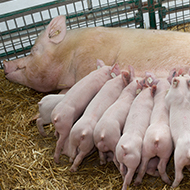
The pig farming sector has already introduced measures to focus on single aspects of animal welfare concerns.

Researchers assess key areas of concern in pig husbandry

A new study, which has used a comprehensive approach to assess the impact of husbandry changes on farm income, public attitudes and animal welfare, has found that measures to improve animal welfare do not automatically effect public opinion.

In response to public concerns about animal welfare, the pig farming sector introduced new measures to focus on single aspects of animal welfare concerns, rather than multiple aspects,  however these changes did not improve public opinion.

The new study – published in the Universities Federation for Animal Welfare (UFAW) journal Animal Welfare – was carried out in the Netherlands. Researchers evaluated animal welfare measures in terms of their effect on animal wellbeing, farm income and public attitudes.

Four common areas of concern in pig husbandry were defined – piglet mortality, tail biting and the indoor housing of gestating sows. Researchers assessed four husbandry changes within each area, including camera surveillance of farrowing, tail docking with analgesia, and provision of straw.

A simulation model was created to estimate and compare the effects of each of these measures for animal welfare, farm income and public opinion.

The results showed that even the most efficient measure in terms of welfare – that which included straw provision, daylight and increased group sizes for gestating sows – still had a low effect on public attitudes.

Ultimately, researchers concluded from the results that measures which improve animal welfare do not necessarily equate to the same degree of improvement in either public attitudes or farm income.

Co-author of the study Dr Tamara Bergstra said: “Our findings indicate that it is essential to use a more comprehensive approach for evaluating animal welfare measures that integrate animal welfare, farm income and public attitudes.” 

Become a member or log in to add this story to your CPD history

Equine Disease Surveillance report released for Q4 2025

News Story 1
 The latest Equine Disease Surveillance report has been released, with details on equine disease from Q4 of 2025.

The report, produced by Equine Infectious Disease Surveillance, includes advice on rule changes for equine influenza vaccination.

Statistics and maps detail recent outbreaks of equine herpes virus, equine influenza, equine strangles and equine grass sickness. A series of laboratory reports provides data on virology, bacteriology, parasitology and toxicosis.

This issue also features a case study of orthoflavivus-associated neurological disease in a horse in the UK. 

Click here for more...
News Shorts
NSA webinar explores sheep tailing and castration

The National Sheep Association (NSA) is to host a free webinar on the castration and tail docking of lambs.

The webinar, 'Understanding the tailing and castration consultation: A guide for sheep farmers', will be hosted online on Monday, 2 March 2026 at 7.30pm.

It comes during a government consultation into the methods used for these procedures. Farmers are encouraged to engage before the consultation period closes on Monday, 9 March 2026.

The webinar offers clear and actionable guidance to support farmers to contribute meaningfully to the consultation and prepare for potential changes.

On the panel will be former SVS president Kate Hovers, farmer and vet Ann Van Eetvelt and SRUC professor in Animal Health and Veterinary Sciences Cathy Dwyer. Each panel member will utilise their own specialism and expertise to evaluate risks and outcomes to sheep farming.

Find out more about the webinar on the NSA website.