


Researchers uncover evidence of diversity within single species
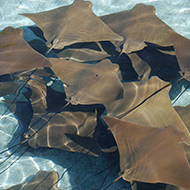
A new study conducted by an international team of scientists has revealed evidence of a potential new species of manta ray and suggested improvements which could bolster protection efforts for threatened ray species around the world.
The study – published in Molecular Ecology – was co-led by Bangor University, the Royal (Dick) School of Veterinary Studies, the Roslin Institute, and the Manta Trust. It provides a framework to protect manta and devil ray species threatened by targeted and bycatch fishing.
The research team collected a large, diverse bank of genetic data on ray species, gathering tissue samples from 116 individuals for DNA analysis. By comparing species scientists could then establish an evolutionary family tree. Further analysis from this family tree highlighted the possibility of a new species in the Gulf of Mexico.
Finding subtle differences in genetic make-up between populations of the same species in different geographical areas has important implications for conservation efforts.
The findings suggest that assigning protection based solely on species classification may not be as effective in protecting individuals.
The research team propose that conservation management should now be carried out within species, to account for differences between populations in different parts of the world.
Dr Emily Humble from the Roslin Institute and Royal (Dick) School of Veterinary Studies said: “Conservation management relies on classifying diversity into discrete categories such as species or population units. For visually similar and elusive animals such as manta and devil rays, this can be challenging.
“Our study illustrates the potential for genomic techniques to capture diversity both within and between species and aid in conservation. The priority now is a formal description of the putative new species in the Atlantic.”


 Eligible members of BEVA will be able to vote for their Council team until Monday, 17 August 2026. Members will have received an election email on 17 July.



