
Your data on MRCVSonline
The nature of the services provided by Vision Media means that we might obtain certain information about you.
Please read our Data Protection and Privacy Policy for details.

In addition, (with your consent) some parts of our website may store a 'cookie' in your browser for the purposes of
functionality or performance monitoring.
Click here to manage your settings.
If you would like to forward this story on to a friend, simply fill in the form below and click send.

Your friend's email:
Your email:
Your name:
 
 
Send Cancel

New study could improve protection efforts for manta rays
These findings suggest that existing protection methods may not be as effective as previously thought.

Researchers uncover evidence of diversity within single species

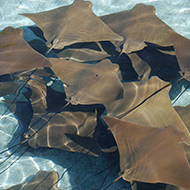
A new study conducted by an international team of scientists has revealed evidence of a potential new species of manta ray and suggested improvements which could bolster protection efforts for threatened ray species around the world.

The study – published in Molecular Ecology – was co-led by Bangor University, the Royal (Dick) School of Veterinary Studies, the Roslin Institute, and the Manta Trust. It provides a framework to protect manta and devil ray species threatened by targeted and bycatch fishing.

The research team collected a large, diverse bank of genetic data on ray species, gathering tissue samples from 116 individuals for DNA analysis. By comparing species scientists could then establish an evolutionary family tree. Further analysis from this family tree highlighted the possibility of a new species in the Gulf of Mexico.

Finding subtle differences in genetic make-up between populations of the same species in different geographical areas has important implications for conservation efforts.

The findings suggest that assigning protection based solely on species classification may not be as effective in protecting individuals.

The research team propose that conservation management should now be carried out within species, to account for differences between populations in different parts of the world.

Dr Emily Humble from the Roslin Institute and Royal (Dick) School of Veterinary Studies said: “Conservation management relies on classifying diversity into discrete categories such as species or population units. For visually similar and elusive animals such as manta and devil rays, this can be challenging.

“Our study illustrates the potential for genomic techniques to capture diversity both within and between species and aid in conservation. The priority now is a formal description of the putative new species in the Atlantic.”

Become a member or log in to add this story to your CPD history

Equine Disease Surveillance report released for Q4 2025

News Story 1
 The latest Equine Disease Surveillance report has been released, with details on equine disease from Q4 of 2025.

The report, produced by Equine Infectious Disease Surveillance, includes advice on rule changes for equine influenza vaccination.

Statistics and maps detail recent outbreaks of equine herpes virus, equine influenza, equine strangles and equine grass sickness. A series of laboratory reports provides data on virology, bacteriology, parasitology and toxicosis.

This issue also features a case study of orthoflavivus-associated neurological disease in a horse in the UK. 

Click here for more...
News Shorts
NSA webinar explores sheep tailing and castration

The National Sheep Association (NSA) is to host a free webinar on the castration and tail docking of lambs.

The webinar, 'Understanding the tailing and castration consultation: A guide for sheep farmers', will be hosted online on Monday, 2 March 2026 at 7.30pm.

It comes during a government consultation into the methods used for these procedures. Farmers are encouraged to engage before the consultation period closes on Monday, 9 March 2026.

The webinar offers clear and actionable guidance to support farmers to contribute meaningfully to the consultation and prepare for potential changes.

On the panel will be former SVS president Kate Hovers, farmer and vet Ann Van Eetvelt and SRUC professor in Animal Health and Veterinary Sciences Cathy Dwyer. Each panel member will utilise their own specialism and expertise to evaluate risks and outcomes to sheep farming.

Find out more about the webinar on the NSA website.

