


DNA discovery could help treat Marek's disease
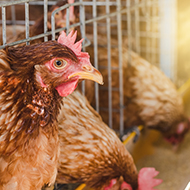
Scientists identified regions of chicken DNA that are seen to play a role in disease resistance.
Researchers at the University of Edinburgh's Roslin Institute have identified regions of chicken DNA associated with resistance to Marek's disease.
Scientists say the discovery, reported in the journal Genes, could pave the way to new therapies or techniques to manage the condition, which costs the global poultry industry some US$ 2 billion every year.The findings also reveal details behind susceptibility to the virus, which could lead to more precise selective breeding strategies.
“Marek’s disease is devastating to flocks worldwide as well as the economy, and current vaccination can only partially control it,” explains Dr Jaqueline Smith, study lead at the Roslin Institute.“Our study identifies regions of the genome associated with resistance, which could be used for mitigating the effects of the virus through selective breeding, improved vaccine design, or future gene-editing technologies.”
In the study, scientists identified regions of chicken DNA that are seen to play a role in disease resistance. Their approach included comparing the DNA of two groups of commercial egg-laying chickens which differed in their resistance to Marek’s disease virus.
The team analysed genetic information from infected chicks and identified variations associated with resistance in the DNA of multiple commercial chicken lines. They also investigated the genetic association with mortality in the infected offspring of egg-laying birds.
Outcomes from this research are the first to provide such a large-scale, high-resolution analysis of genes underlying resistance to the virus in birds relevant to the poultry industry.
Because the tumours caused by Marek’s disease virus have similarities to human lymphoma, researchers hope that their findings may also be able to increase understanding of human cancers.


 A nationwide roadshow offering free, personalised parasite risk assessments and flea and tick checks will be visiting popular dog events across the UK.



