
Your data on MRCVSonline
The nature of the services provided by Vision Media means that we might obtain certain information about you.
Please read our Data Protection and Privacy Policy for details.

In addition, (with your consent) some parts of our website may store a 'cookie' in your browser for the purposes of
functionality or performance monitoring.
Click here to manage your settings.
If you would like to forward this story on to a friend, simply fill in the form below and click send.

Your friend's email:
Your email:
Your name:
 
 
Send Cancel

'Snip the straps' off face masks, public urged
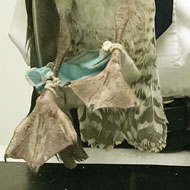
RSPCA officers were called out to a gull with a face mask wrapped tightly around its legs.

New figures reveal impact of litter on wildlife since start of lockdown.

The RSPCA has issued a plea to the public to 'snip the straps' off disposable face masks after a gull was found with a mask wrapped tightly around its legs.

The charity reports that the bird has made a full recovery, despite the mask causing swelling to his legs, and hopes that the new 'snip the straps' message will prevent similar incidents from occurring.

RSPCA chief executive Chris Sherwood said: “For many years the public have been aware of the message to cut up plastic six-pack rings before throwing them away to stop animals getting tangled in them, and now we are keen to get out the message that the same should be done for face masks too - as very sadly, animals are susceptible to getting tangled up in them.”

The call comes as new figures show the impact litter has had on animals since the start of lockdown. Since 23 March, RSPCA Cymru reports that it handled 35 separate incidents across the country concerning animals caught in rubbish.

Among the incidents include a swan found with his head stuck in a discarded foam play square, and another swan rescued after getting a barbed fishing hook stuck in his neck. The RSPCA says that the majority of these events are entirely preventable if rubbish is disposed of correctly.

Mr Sherwood added: “Our RSPCA officers have had to rescue animals from getting tangled in face masks and we expect incidents may go up as time goes on, so the best thing to do is to simply cut the elastic ear straps in half before throwing it away.”

Image (C) RSPCA.

Become a member or log in to add this story to your CPD history

Equine Disease Surveillance report released for Q4 2025

News Story 1
 The latest Equine Disease Surveillance report has been released, with details on equine disease from Q4 of 2025.

The report, produced by Equine Infectious Disease Surveillance, includes advice on rule changes for equine influenza vaccination.

Statistics and maps detail recent outbreaks of equine herpes virus, equine influenza, equine strangles and equine grass sickness. A series of laboratory reports provides data on virology, bacteriology, parasitology and toxicosis.

This issue also features a case study of orthoflavivus-associated neurological disease in a horse in the UK. 

Click here for more...
News Shorts
RCVS annual renewal fee for vets due

RCVS' annual renewal fee for veterinary surgeons is now due. Vets must pay their renewal fee before Wednesday, 1 April 2026.

This year's standard annual fee has increased to 431 from last year's 418. This is an approximately three per cent increase, as approved by RCVS Council and the Privy Council.

Tshidi Gardner, RCVS treasurer, said: "The small fee increase will be used to help deliver both our everyday activities and our new ambitious Strategic Plan, which includes aims such as achieving new legislation, reviewing the Codes of Professional Conduct and supporting guidance, and continuing to support the professions through activities such as the Mind Matters Initiative, RCVS Academy and career development."

A full breakdown of the new fees is on the RCVS website. Information about tax relief is available on the UK government website.

