


Study identifies five cat owner types
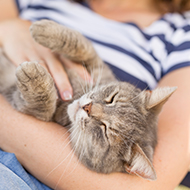
The findings will improve understanding of how owners view their cats and how best to manage them.
Researchers at the University of Exeter have identified five types of cat owner based on attitudes towards hunting and roaming.
Their survey of 56 cat owners from across the UK shows that attitudes vary from “conscientious caretakers", who are concerned about cats’ impact on wildlife, to "freedom defenders" who opposed restrictions on cat behaviour altogether.
“Tolerant guardians” disliked their cats hunting but tended to accept it, “laissez-faire landlords" were mostly unaware of any issues around cats hunting, while "concerned protectors" focussed on cat safety.
Scientists say their findings, published in the journal Frontiers in Ecology and the Environment, will improve understanding of how owners view their cats and how best to manage them.
Lead author, Dr Sarah Crowley, said: "Although we found a range of views, most UK cat owners valued outdoor access for their cats and opposed the idea of keeping them inside to prevent hunting. Cat confinement policies are therefore unlikely to find support among owners in the UK.”
Earlier this year, a study led by US researchers found that domestic cats kill two to ten times more wildlife than their wild predators. Addressing the problem, however, has been difficult owing to disagreements between those focussed on wildlife conservation and those prioritising cat welfare.
This latest research forms part of Exeter's "Cats, Cat Owners and Wildlife" project, which aims to strike a balance by identifying ways of owners managing their cats that benefit the cats as well as reducing wildlife killing.
Dr Crowley continued: “Only one of the owner types viewed hunting as a positive, suggesting the rest might be interested in reducing it by some means. To be most effective, efforts to reduce hunting must be compatible with owners' diverse circumstances."
Many cat owners already fit their pets with bells, but researchers suggest that brightly coloured “BirdsBeSafe” collar covers could also reduce hunting success. The team is now examining the effectiveness of these and other new measures and how owners feel about them, in a bid to offer alternative solutions.
A simple quiz has also been created alongside this study so that cat owners can find out which category best describes them.


 The




