


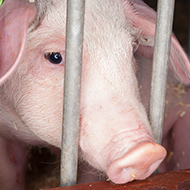
Updated policy includes recommendations for farmed and wild-caught fish.
The BVA has published a comprehensive policy outlining 67 recommendations to improve the welfare of animals slaughter.
The new policy comes ahead of an upcoming DEFRA review of England's Welfare of Animals at the Time of Killing regulations (WATOK).
Building on current legislation, BVA's latest position focuses on the final events of an animal's life, suggesting amendments to the vital role of the Official Veterinarian and the provision of suitable abattoir facilities.
The policy also makes recommendations for the preparation, transport and acceptance for slaughter, handling operations and effective stunning. Other suggestions relate to non-stun slaughter, the improved regulation of stunning, and consumer education.
“With millions of animals slaughtered each year to provide us with the food we eat, we have a responsibility to provide them with a life worth living and a humane death,” explained BVA senior vice president, Simon Doherty.
“Our updated position aims to do just that by building on existing legislation and guiding the industry in a direction that better protects the welfare of animals destined for the food chain."
The updated policy spans a wide variety of species, including fish for the first time. BVA calls on the UK government to include the effective stunning of farmed finfish, as well as general welfare protections in WATOK regulations.
The policy also pushes for more research into developing humane and effective ways to stun decapods (shrimp, lobsters and crabs), cephalopods (squid and octopus) and wild-caught fish.
Mr Doherty continued: “Slaughter processes should be designed to minimise avoidable pain, distress, fear, and suffering and this document looks at all of the ways that we as vets can work with industry bodies and farm colleagues to improve the legislation already in place.”
Research conducted in 2018 by the Food Standards Agency (FSA) found that 20 million animals, excluding fish, were slaughtered across 248 operating plants in England and Wales during a single week.
BVA’s new position sets out recommendations for a range of stakeholders, government, industry, researchers and the veterinary profession, at each stage of the slaughter process. Among the list of recommendations includes a call to improve the regulation of non-stun slaughter by working with Islamic scholars and Halal certification bodies.
Dr Doherty said: “From making sure that stunning methods are as effective as possible, to looking at the specific needs of each species, revalidation of training for operators, and championing the role of the Official Veterinarian, there is a lot of work to be done but we look forward to progressing these recommendations and working to improve the welfare of farmed animals across the UK.”


 The RCVS has announced a new version of its 1CPD mobile app, with enhanced features for veterinary surgeons and veterinary nurses to record their continuing professional development.



