
Your data on MRCVSonline
The nature of the services provided by Vision Media means that we might obtain certain information about you.
Please read our Data Protection and Privacy Policy for details.

In addition, (with your consent) some parts of our website may store a 'cookie' in your browser for the purposes of
functionality or performance monitoring.
Click here to manage your settings.
If you would like to forward this story on to a friend, simply fill in the form below and click send.

Your friend's email:
Your email:
Your name:
 
 
Send Cancel

Chicken ownership on the rise, survey reveals
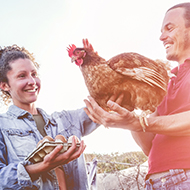
"People worried about food supplies and saw chicken ownership as a source of fresh food" - Ben Braithwaite.
More people moving to chicken ownership as a sustainable food source during pandemic.

There is a growing trend in chicken ownership in the UK, with up to 200,000 new chicken owners appearing year on year since 2018, according to new research.

A survey by Cambridge-based firm ChickenGuard found that in 2019, there were 1,028,000 chicken owners in the UK, rising to 1,338,000 in 2020. The organisation says this figure has further risen during the coronavirus pandemic, as more people moved to chicken ownership as a sustainable food source.

Ben Braithwaite from ChickenGuard comments: “We have been closely monitoring the rise in chicken ownership over the last couple of years and the pet survey has really shone some light on the growing trend in countries all over the world. The pandemic has brought more households into the fold as people worried about food supplies and saw chicken ownership as also a source of fresh food.

“That, alongside the increase in celebrity keepers, has made chickens more popular than the hamster, guinea pig and the previously most popular feathered friend, the budgie.”

The British Hen Welfare Trust (BHWT) has also reported an uptick in the number of people wanting to re-home chickens during the coronavirus pandemic. Speaking to Sky News earlier this year, BHWT founder Jane Howorth said that the charity's waiting list had grown to record numbers.

"Although this is typically a busy time of year for us as the spring sunshine emerges and people become more interested in outdoor activities, without doubt, COVID-19 has increased interest further still," she said. “A lot of people have been thinking about keeping hens for some time, others simply want to have a supply of fresh eggs at the bottom of the garden."


Become a member or log in to add this story to your CPD history

Defra shares new Sanitary and Phytosanitary guidance

News Story 1
 Defra has published guidance for the vet sector ahead of a proposed UK-EU Sanitary and Phytosanitary agreement.


The agreement, which will change the movement and trade of animals and related products, could see reductions in checks, paperwork and certification. As well as describing regulatory developments, the advice highlights the importance of animal ID, registration and traceability in disease control and other compliance arrangements.

The guidance can be found here. More detail is expected as negotiations progress. 

Click here for more...
News Shorts
BSAVA publishes fifth Manual of Canine and Feline Neurology

The BSAVA has published the fifth edition of its BSAVA Manual of Canine and Feline Neurology.

The new edition has been reviewed and updated, including new developments in diagnostics, therapeutic approaches and clinical decision-making. It is structured to support clinicians through diagnosis, treatment and long-term management.

The guide features five new chapters covering acute myelopathies, chronic myelopathies, emergency protocols, neurotoxicology and neuro-oncology.

It also includes over 100 videos, including demonstrations of neurological examinations, clinical presentations and diagnostic procedures.

Nicola Lloyd, publishing manager, said: "Whether you're a general practitioner seeking practical guidance, or a specialist aiming to refine your expertise, this edition remains an indispensable reference for anyone involved in the care of neurologically compromised dogs and cats."