


Single “dog year” not equal to seven “human years”, study reveals
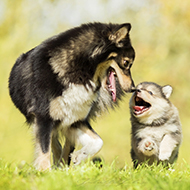
The study found that a one-year-old dog is similar to a 30-year-old human.
Researchers at the University of California (UC) have discovered that young dogs age rapidly compared to humans, debunking the idea that a single “dog year” is equivalent to seven “human years”.
The study, published in the journal Cell Systems, found that a one-year-old dog is similar to a 30-year-old human, a four-year-old dog is similar to a 52-year-old human, and that by seven years old, dog ageing slows.
“This makes sense when you think about it — after all, a nine-month-old dog can have puppies, so we already knew that the 1:7 ratio wasn’t an accurate measure of age,” explained senior author Trey Ideker, professor at UC San Diego School of Medicine and Moores Cancer Center.
In the study, researchers created a new formula for comparing the ages of humans and dogs. The formula is based on 'epigenetic changes' to DNA – modifications that influence which genes are switched “on” or “off”.
The team looked at the changing patterns of methyl groups in dog and human DNA over time. Drawing on blood samples from 105 Labrador retrievers, their results reveal that humans and dog don't age at the same rate over their lifespans as the 1:7 years adage would suggest.
Researchers say the new formula, which is transferable across species, is more accurately able to compare the ages of humans and dogs. It could also provide a useful tool for veterinary surgeons and for evaluating anti-ageing interventions.


 Companies marketing medicines for small pets exempt from authorisation must submit their annual return to the Veterinary Medicines Directorate (VMD) by 30 November 2026.



