


Experts unite for 28th National Equine Forum
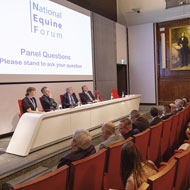
"The forum is all about being the facilitator of knowledge in the industry" - Georgina Crossman, NEF convener.
Event was live-streamed to more than 20 countries
Leading figures from across the veterinary, equestrian and charitable sectors gathered in London earlier this month for the 28th National Equine Forum (NEF).
Leading figures from across the veterinary, equestrian and charitable sectors gathered in London earlier this month for the 28th National Equine Forum (NEF).
The event, which was live-streamed to more than 20 countries, covered an array of topics from disease risk, the donkey skin trade and social licence. It also looked at behavioural change and preparation for the Tokyo Olympics.
To improve and maximise audience interaction, this year saw the introduction of an audience participation tool, Sli.do. More than 400 users submitted questions to the experts, which were answered in the Q&A panels after some of the sessions.
Georgina Crossman, NEF convener, said: "The Forum is all about being the facilitator of knowledge in the industry. Building our audience is the best way to ensure the right information reaches as many people as possible. We thank you all for your support, engagement and interaction."
During the event, rural affairs minister Lord Gardiner of Kimble presented The Defra view of the horse industry in a changing world. He announced that the Central Equine database will shortly allow owners to update their details via the online Digital Stable. This comes ahead of the microchipping deadline of 1 October 2020, which applies to all horses born before 2009.
The event also saw Dr Richard Newton, director of epidemiology and disease surveillance at the Animal Health Trust, discuss managing infectious disease risks. Using the recent outbreaks of equine viral arteritis and equine influenza outbreaks as examples, he explained strategies to minimise the chance of disease risk.
The NEF is organised by a committee reflecting various sectors of the equine industry and is presided by HRH Princess Royal. All of the sessions from the event can be viewed here.


 Defra has published guidance for the vet sector ahead of a proposed UK-EU Sanitary and Phytosanitary agreement.



