


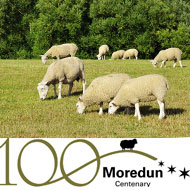
The organisation started in 1920 as the Animal Diseases Research Association
The Moredun Research Foundation marked a historic milestone on Tuesday (17 March) when it celebrated its 100th anniversary.
Located on the outskirts of Edinburgh, the institute is dedicated to promoting the highest standard of animal health and welfare through research and education. It was set up by a committee of farmers in 1920, and has since developed many of the diagnostic tests, vaccines and disease prevention and control strategies used on farm today.
“Moredun focusses its research on infectious diseases of livestock and wildlife species, especially those which are endemic, or common, diseases which adversely affect the efficiency of production and animal welfare,” said Professor Julie Fitzpatrick, CEO of the Moredun Group.
“The organisation has developed scientific expertise in studying the viruses, bacteria and parasites that cause disease and the animal species they infect. We are proud of our long history of delivering practical tools and solutions to ensure safe, high-quality food from livestock and look forward to continuing our important work”.
Started in 1920 as the Animal Diseases Research Association, the initial objectives of the organisation were to “research infectious diseases of livestock and to apply available knowledge to farm practice”.
The ethos of the Foundation is to apply innovative science to develop solutions to control infectious diseases and to ensure that any advances in new technologies and knowledge are communicated effectively with those that can benefit from them.
Ian Duncan Millar, chairman of the Moredun Foundation, added: “It was on this day, 17th March 1920, exactly 100 years ago that a public meeting was held in the chambers of the Royal Agricultural Society of Scotland and the Animal Disease Research Association was formed.
“One of the tenets of the new Association was to “…be in a favourable position to influence stock owners and in this matter science has scarcely penetrated farm practice. It will be an essential part of the organisation to bridge the gap between research workers and farmers”.


 Eligible members of BEVA will be able to vote for their Council team until Monday, 17 August 2026. Members will have received an election email on 17 July.



