
Your data on MRCVSonline
The nature of the services provided by Vision Media means that we might obtain certain information about you.
Please read our Data Protection and Privacy Policy for details.

In addition, (with your consent) some parts of our website may store a 'cookie' in your browser for the purposes of
functionality or performance monitoring.
Click here to manage your settings.
If you would like to forward this story on to a friend, simply fill in the form below and click send.

Your friend's email:
Your email:
Your name:
 
 
Send Cancel

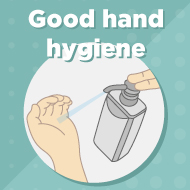
Maintaining good hand hygiene
The WHO has stated that washing your hands is the most effective method of preventing transmission.

WHO advice for preventing infection

The World Health Organisation (WHO) is advising everyone to regularly and thoroughly clean their hands in order to reduce the spread of the COVID-19 virus.

The guidance states that washing your hands properly should take between 20 and 30 seconds, and should be done more often than usual, particularly after sneezing, coughing, blowing your nose or after being in public spaces where other people are doing so.

Hands should be washed with soap and water – or alcohol-based rub if this is all you have access to – and dried thoroughly afterwards.

The organisation also emphasises the importance of avoiding touching your face as this can transfer the infection to your eyes, nose and mouth, increasing the chance of the virus entering your body.

The WHO has produced two posters on hand washing and rubbing with images, which provide a step-by-step guide on how to properly wash hands.

For more information please visit the WHO website at www.who.int
Become a member or log in to add this story to your CPD history

Vets and vet nurses needed for nutrition study

News Story 1
 The University of Glasgow is seeking participants for a new study into vet professionals nutrition-related knowledge, competence and decision-making.


UK-based veterinary surgeons and registered veterinary nurses are being invited to take part in a project investigating nutrition-related patient care and client advice. Participants must have been qualified for between two and 10 years, and must be currently working in clinical practice with small animals.

To register to take part, those interested should complete a screening questionnaire. 

Click here for more...
News Shorts
APHA launches free virtual work experience programme

The Animal and Plant Health Agency (APHA), in collaboration with Springpod, has launched a free virtual work experience programme, giving young people across the UK the chance to explore careers dedicated to protecting animal and plant health.

The on-demand programme offers a unique insight into career opportunities within APHA, showcasing how students can contribute to tackling some of the UK's most critical biosecurity and environmental challenges.

Designed for students aged 13 and over, the course includes more than 10 hours of engaging content featuring real-life industry insights, scenario-based challenges, and practical guidance on applying for jobs. To register for the course, visit the APHA website.
