Your data on MRCVSonline
The nature of the services provided by Vision Media means that we might obtain certain information about you.
Please read our Data Protection and Privacy Policy for details.

In addition, (with your consent) some parts of our website may store a 'cookie' in your browser for the purposes of
functionality or performance monitoring.
Click here to manage your settings.
If you would like to forward this story on to a friend, simply fill in the form below and click send.

Your friend's email:
Your email:
Your name:
 
 
Send Cancel

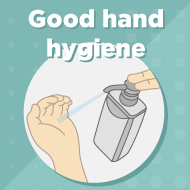
Maintaining good hand hygiene
The WHO has stated that washing your hands is the most effective method of preventing transmission.

WHO advice for preventing infection

The World Health Organisation (WHO) is advising everyone to regularly and thoroughly clean their hands in order to reduce the spread of the COVID-19 virus.

The guidance states that washing your hands properly should take between 20 and 30 seconds, and should be done more often than usual, particularly after sneezing, coughing, blowing your nose or after being in public spaces where other people are doing so.

Hands should be washed with soap and water – or alcohol-based rub if this is all you have access to – and dried thoroughly afterwards.

The organisation also emphasises the importance of avoiding touching your face as this can transfer the infection to your eyes, nose and mouth, increasing the chance of the virus entering your body.

The WHO has produced two posters on hand washing and rubbing with images, which provide a step-by-step guide on how to properly wash hands.

For more information please visit the WHO website at www.who.int

Become a member or log in to add this story to your CPD history

SPVS and FIVP launch VSA survey

News Story 1
 SPVS and FIVP have collaborated to launch a short survey about the proposed reform of the Veterinary Surgeons Act.


The survey will ensure that each organisation's submission accurately represents the experiences of practising veterinary professionals. It will also explore awareness, use and perceived value of the roles undertaken by the RCVS.

It takes around 5-10 minutes to complete, and all responses are anonymous. The survey can be completed here until Thursday, 19 March 2026. 

Click here for more...
News Shorts
RCVS annual renewal fee for vets due

RCVS' annual renewal fee for veterinary surgeons is now due. Vets must pay their renewal fee before Wednesday, 1 April 2026.

This year's standard annual fee has increased to 431 from last year's 418. This is an approximately three per cent increase, as approved by RCVS Council and the Privy Council.

Tshidi Gardner, RCVS treasurer, said: "The small fee increase will be used to help deliver both our everyday activities and our new ambitious Strategic Plan, which includes aims such as achieving new legislation, reviewing the Codes of Professional Conduct and supporting guidance, and continuing to support the professions through activities such as the Mind Matters Initiative, RCVS Academy and career development."

A full breakdown of the new fees is on the RCVS website. Information about tax relief is available on the UK government website.