


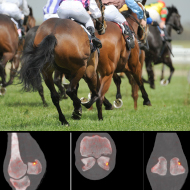
Discussions to inform pre-race risk assessments
In a two-day collaborative workshop, veterinary professionals and racing industry stakeholders met to discuss current and potential technologies used in pre-empting injuries to the racehorse fetlock. These injuries are thankfully rare, but can still be extremely impactful and potentially career-ending for some injured horses.
The first day of the workshop saw the meeting of a panel of veterinary professionals, who reviewed existing knowledge on the use of diagnostic imaging in risk reduction, as well as discussing the potential of advanced imaging such as MRI, standing CT and PET scanning to identify pathology even earlier.
The panel also assessed how best to generate research evidence which would advance the adoption of these novel technologies in effective pre-race risk assessment programmes.
On the second day of the workshop, a larger group of stakeholders reviewed the previous day’s conclusions and acknowledged the need for greater education, collaboration and transparency among racing industry stakeholders in order to uphold and advance racehorse safety and welfare.
Prof Celia Marr, editor of Equine Veterinary Journal, who chaired the meeting said: “Racing has an excellent safety record and the injuries we are talking about are extremely rare. The low prevalence of fetlock injury makes it very difficult to pinpoint the affected individuals. But it is essential that we continue our efforts to do so ever more effectively because if silent injury is not detected it can progress to become much more serious.”
Pete Ramzan, partner at Rossdales LLP, who co-ordinated the workshop said: “There was a great need to get some of the key experts leading these new technologies together in the same room to correlate their findings and work out how to translate them into tangible reductions in serious injury rates.
"One of the somewhat unexpected outcomes of the discussions was that despite the fact that we are riding the crest of a wave of technological advances, basic radiography still has much to offer; better education around the application and interpretation of radiographs has real potential to allow vets like myself at the coal face to detect injuries at an early and recoverable stage."
Image (c) Dr P. Ramzan, Rossdales LLP.


 Two independent vets have launched a podcast to help owners strengthen their bond with pets. Dr Maggie Roberts and Dr Vanessa Howie, who have worked in both veterinary practice and major charities, are keen to use their experience to enable people to give pets a better life.



