
Your data on MRCVSonline
The nature of the services provided by Vision Media means that we might obtain certain information about you.
Please read our Data Protection and Privacy Policy for details.

In addition, (with your consent) some parts of our website may store a 'cookie' in your browser for the purposes of
functionality or performance monitoring.
Click here to manage your settings.
If you would like to forward this story on to a friend, simply fill in the form below and click send.

Your friend's email:
Your email:
Your name:
 
 
Send Cancel

‘Unexpected’ number of AMR genes found on pig farm
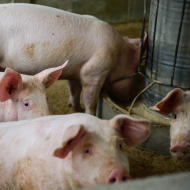
This study was carried out during a single produciton cycle on a commercial pig farm.

New study highlights extent of AMR gene ‘pollution’ in livestock production

Researchers from Scotland’s Rural College (SRUC) have discovered a high number of antimicrobial resistance (AMR) genes in pig faeces at a commercial farm.

Antimicrobial agents are used regularly to control disease in livestock, but little is known about how this impacts antimicrobial resistance gene dynamics. This has raised concerns about the possibility of AMR genes being transferred from livestock to humans and into the environment.

Conducted alongside the University of Edinburgh’s Roslin Institute, this was the first longitudinal study of its kind. Carried out during a single production cycle on a commercial pig farm with high antimicrobial usage.

In total, 144 different genes were identified. Individual genes were present in the tens, hundreds and thousands of millions per gram of pig faeces. SRUC states that this unexpected discovery highlights the extent of AMR gene pollution in livestock production and the environment.

The results also suggested that the genes had become integrated into the faecal microbial community, as AMR gene counts remained relatively stable over time.

However, despite these high and somewhat stable levels of AMR genes, the antimicrobials used were still effective in controlling production-limiting diseases on the farm.

Professor Michael Hutchings, head of animal and veterinary sciences at SRUC, commented: “At the start of the study we hoped to find two or three genes to follow their numbers through the pig production cycle. The richness of AMR genes and their numbers were unexpected.”

Become a member or log in to add this story to your CPD history

FIVP publishes CMA Compliance Checklist

News Story 1
 FIVP has published a CMA Compliance Checklist to support independent practices with the Market Investigation Order.

The document includes deadlines for small and large businesses, with tick boxes for each of the tasks. The organisation also invites practices to contact them for support with requirements.

Rita Dingwall, FIVP chair, said: FIVP appreciates that navigating the new CMA requirements can feel daunting. We hope this checklist will make things a little easier, helping independent practices work through what is required with confidence. 

Click here for more...
News Shorts
APHA launches free virtual work experience programme

The Animal and Plant Health Agency (APHA), in collaboration with Springpod, has launched a free virtual work experience programme, giving young people across the UK the chance to explore careers dedicated to protecting animal and plant health.

The on-demand programme offers a unique insight into career opportunities within APHA, showcasing how students can contribute to tackling some of the UK's most critical biosecurity and environmental challenges.

Designed for students aged 13 and over, the course includes more than 10 hours of engaging content featuring real-life industry insights, scenario-based challenges, and practical guidance on applying for jobs. To register for the course, visit the APHA website.

