


Nations work to strengthen joint disease control strategies
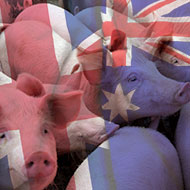
The UK and New South Wales government in Australia are collaborating this week on a joint, simulated exercise, to test and strengthen biosecurity measures in the event of an African swine fever (ASF) outbreak.
There has never been an outbreak of ASF in the UK, and there are substantial measures in place to protect against it. However, it is a major risk to both Australia and the UK’s pig industries, due to trade links and proximity to affected regions in Asia and Europe.
Current biosecurity measures dictate that, in the event of an outbreak, UK and Australian governments will put in place movement controls for all pig-related businesses, possibly including feed delivery, slaughter houses, pig breeding units or movement of animals to sale.
According to the UK government’s statement, this exercise’s main purpose is to assess how the movement restrictions would be applied in practice to best manage an ASF outbreak. Experts in risk assessment, epidemiology, science and disease control policy from Australia and the UK are taking part, working to develop strategies to control ASF.
The exercise takes place over three days, beginning on Wednesday 29 January. The New South Wales Department of Primary Industries (DPI) will be working alongside Local Land Services and the Commonwealth Scientific and Industrial Research Organisation (CSIRO) Australian Animal Health Laboratory in Geelong. At the same time, teams from Defra and the Animal Plant and Health Agency (APHA) will be participating in the exercise in London, UK.
Christine Middlemiss, chief veterinary officer, said: “The UK has strong links with Australia and scientific cooperation is one of them, so I welcome this initiative to share information and experience, helping us to maintain our high biosecurity standards.”


 Companies marketing medicines for small pets exempt from authorisation must submit their annual return to the Veterinary Medicines Directorate (VMD) by 30 November 2026.



