
Your data on MRCVSonline
The nature of the services provided by Vision Media means that we might obtain certain information about you.
Please read our Data Protection and Privacy Policy for details.

In addition, (with your consent) some parts of our website may store a 'cookie' in your browser for the purposes of
functionality or performance monitoring.
Click here to manage your settings.
If you would like to forward this story on to a friend, simply fill in the form below and click send.

Your friend's email:
Your email:
Your name:
 
 
Send Cancel

Endoscopic foreign body retrieval study shows promising results
Endoscopic foreign body retrieval in cats is associated with good overall outcomes.

Research demonstrates a high success rate with few complications

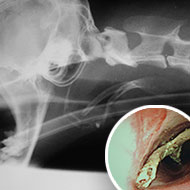
Endoscopic foreign body retrieval in cats is associated with good overall outcomes and low complication rates, according to new research.


A study published in the Journal of Small Animal Practice (JSAP) scanned medical records from a single private referral practice for instances of foreign body endoscopy. A total of 52 cats with gastric and oesophageal foreign bodies were included in the analysis.

The research was carried out by researchers at the Metropolitan Veterinary Hospital in Ohio. Lead author, Vanessa Dollo said: “The study supports the use of endoscopy for the retrieval of foreign bodies from the oesophagus and stomach of cats, demonstrating a high success rate (94.2 per cent). 


“Whilst overall complication rate was low (15.4 per cent), major complications including oesophageal stricture formation and cardiopulmonary arrest may occur. Cats with oesophageal foreign bodies were more likely to experience major complications than those with gastric foreign bodies.”


Despite its success, the researchers stress that there are limitations to the study. For example, the cats were treated at one referral practice, and the results may not be representative of other practices.


Furthermore, six clinicians performed the endoscopy and so there may have been some descriptive bias introduced. The team addressed this issue by retrospectively grading the images obtained during the procedure to assess the severity of oesophagitis and gastritis. 


Nicholas Jeffery, editor of the JSAP added: “Endoscopy is often the preferred treatment method in retrieval of OFBs and GFBs as it avoids the need for surgical intervention and associated operative pain. It is encouraging, therefore, that the results of this study appear to show a good overall outcome for affected cats.”

Become a member or log in to add this story to your CPD history

New RCVS Academy courses to remove barriers in vet care

News Story 1
 The RCVS Academy has launched two courses to its new client support series, as it seeks to improve accessibility in veterinary settings.

The courses will help professionals to support assistance dog partnerships and clients with hearing loss.

The Hearing loss and Assistance dogs courses saw RCVS project lead Catherine Hemingway collaborate with the British Deaf Association and Assistance Dogs UK. Vets will gain practical guidance on supporting clients with additional needs.

Each course takes an hour to complete, and can be accessed by RCVS registrants for free. 

Click here for more...
News Shorts
APHA launches free virtual work experience programme

The Animal and Plant Health Agency (APHA), in collaboration with Springpod, has launched a free virtual work experience programme, giving young people across the UK the chance to explore careers dedicated to protecting animal and plant health.

The on-demand programme offers a unique insight into career opportunities within APHA, showcasing how students can contribute to tackling some of the UK's most critical biosecurity and environmental challenges.

Designed for students aged 13 and over, the course includes more than 10 hours of engaging content featuring real-life industry insights, scenario-based challenges, and practical guidance on applying for jobs. To register for the course, visit the APHA website.

