


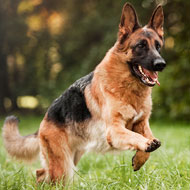
Kennel Club research shows schemes are being used more widely
Kennel Club research has revealed a significant improvement in hip and elbow scores for some of the UK’s most commonly health-screened dog breeds.
The study, published in the journal Frontiers, assessed the importance of hip and elbow screening on the long-term health of dogs. Researchers analysed data from six commonly-screened breeds (Labrador retriever, golden retriever, German shepherd, rottweiler, Bernese mountain dog and Newfoundland).
Scientists found that not only have the proportion of dogs screened for hip and elbow dysplasia increased over time but that the grades and scores of dogs used for breeding have also been improving. In most of the reviewed breeds, there was a marked decline in severe hip scores and a more modest, but still notable, decline in severe elbow scores.
Researchers also looked at from Estimated Breeding Values (a resource that links hip scores and elbow grades to family/pedigree data) and found that in the six breeds studied, recent generations of dogs are genetically at a lower risk of dysplasia than dogs bred 30 years ago.
“Our research shows that these screening schemes have become more widely used, resulting in fewer puppies being born from untested parents,” explained Dr Tom Lewis, quantitative geneticist and genetics research manager at the Kennel Club.
“Breeders are increasingly choosing breeding stock with better scores and this careful consideration is significantly helping to improve dog health, demonstrating the significant positive impact that responsible breeders can have, and have had, on the health of dogs.”
Bill Lambert, senior health and welfare manager at the Kennel Club added: “The Kennel Club closely collaborates with breed clubs, vets and researchers as part of our Breed Health and Conservation Plans project which aims to identify, prioritise and tackle inherited breed-specific diseases.
“This research will be used to help the six breeds studied develop strategies for continuing to reduce the risk of dysplasia in future generations and also demonstrates to other breeds – particularly those that are currently trying to tackle hip and elbow dysplasia – how their concentrated efforts can make a significant difference to dog health and welfare.”


 Defra has published guidance for the vet sector ahead of a proposed UK-EU Sanitary and Phytosanitary agreement.



