
Your data on MRCVSonline
The nature of the services provided by Vision Media means that we might obtain certain information about you.
Please read our Data Protection and Privacy Policy for details.

In addition, (with your consent) some parts of our website may store a 'cookie' in your browser for the purposes of
functionality or performance monitoring.
Click here to manage your settings.
If you would like to forward this story on to a friend, simply fill in the form below and click send.

Your friend's email:
Your email:
Your name:
 
 
Send Cancel

Injectable omeprazole ‘can be used within rules’, BHA confirms
"Long-acting injectable omeprazole has become an important treatment option for horses with gastric disease" - Dr Mike Hewetson. 

Vets had been previously advised against using the drug owing to traces of testosterone

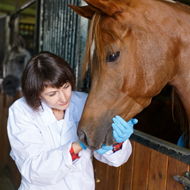
The British Horseracing Authority (BHA) has announced that injectable omeprazole, manufactured by Bova UK, can now be used in racehorses ‘within rules’.

Veterinary professionals had previously been advised against possessing, using or administering the drug in racehorses after small traces of testosterone were discovered in a batch of the product last year.


Although independent experts said there could be no adverse effects on equine health or equestrian sport, BOVA took immediate action to identify and eliminate the ingredient that contained the testosterone.


In September 2019, the product was declared free of testosterone and has since continued to be used in Australian racehorses after guidance from Racing NSW. Tests on multiple samples of injectable omeprazole ahead of sale have also since demonstrated the product to be free of testosterone. 


Dr Mike Hewetson from the Royal Veterinary College explained: “Long-acting injectable omeprazole has become an important treatment option for horses with gastric disease, particularly those affected by glandular gastric disease.”

A recent blind clinical trial of Bova’s injectable omeprazole found that healing rates for both glandular and squamous gastric disease were four times higher with injectable omeprazole than with a registered oral product.

Become a member or log in to add this story to your CPD history

Equine Disease Surveillance report released for Q4 2025

News Story 1
 The latest Equine Disease Surveillance report has been released, with details on equine disease from Q4 of 2025.

The report, produced by Equine Infectious Disease Surveillance, includes advice on rule changes for equine influenza vaccination.

Statistics and maps detail recent outbreaks of equine herpes virus, equine influenza, equine strangles and equine grass sickness. A series of laboratory reports provides data on virology, bacteriology, parasitology and toxicosis.

This issue also features a case study of orthoflavivus-associated neurological disease in a horse in the UK. 

Click here for more...
News Shorts
RCVS members invited to question Council candidates

RCVS members have been invited to submit questions to candidates for this year's RCVS Council election.

With 15 candidates standing for three available positions, vets have been invited to submit a question of their choosing before voting starts. These questions will be collated, with each candidate answering one question of their choice.

It is recommended that members read the candidates' biographies and statements before submitting questions. One question per member can be submitted to vetvote26@rcvs.org.uk before Wednesday, 25 February 2026.

The RCVS Council election is due to start in March.

With only two candidates for two positions on the VN Council, there will be no VN Council elections this year. Meghan Conroy RVN and Lauren Hargrave RVN will begin their three year terms at RCVS' AGM in July.

