
Your data on MRCVSonline
The nature of the services provided by Vision Media means that we might obtain certain information about you.
Please read our Data Protection and Privacy Policy for details.

In addition, (with your consent) some parts of our website may store a 'cookie' in your browser for the purposes of
functionality or performance monitoring.
Click here to manage your settings.
If you would like to forward this story on to a friend, simply fill in the form below and click send.

Your friend's email:
Your email:
Your name:
 
 
Send Cancel

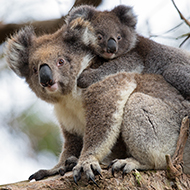
University of Sydney confirms 480 million animals killed in NSW bushfires
Australia supports more than 300 native species and is the only great land mass to contain three major groups of living mammals: marsupials, monotremes and placentals.

Australia reportedly holds world’s highest rate of species loss

A new study from the University of Sydney states that 480 million animals have been affected by the bushfires in New South Wales (NSW) since September. It outlines Australia’s diverse mammal population, and explains how the authors have calculated this figure.

The findings were based on a report, published for the WWF in 2007, that author Professor Chris Dickman contributed to. The report used published studies to obtain estimates of mammal population density in NSW. These estimates were then multiplied by the amount of land that was approved to be cleared by the state government between 1998 and 2005, to then calculate the impact of land clearing on NSW’s wildlife.

Using this formula, Prof Dickman of the School of Life and Environmental Sciences was then able to estimate that 480 million animals have been affected by the bushfires since September 2019, although the authors stated that they intentionally used vastly conservative estimates while making their calculations, and the actual loss of animal life is expected to be much higher.

Many of these animals were most likely killed directly by the fires, while others would have perished as a result of the depletion of food and shelter. This figure only relates to NSW, and does not include insects, bats or frogs.

Australia supports over 300 native species, and is the only great land mass to contain three major groups of living mammals: marsupials, monotremes (platypus and echidna) and placentals. According to the study, 81 per cent of these unique mammals are found only in Australia.

Around 34 species and subspecies of native mammals have become extinct in the continent over the last 200 years, this, according to Prof Dickman, is the highest rate of loss for any region in the world.


Become a member or log in to add this story to your CPD history

BSAVA partners with BVA Live 2026

News Story 1
 BSAVA is to partner with BVA Live (11-12 June 2026) to champion clinical research.

The organisation will be supporting BVA Live's Clinical Abstracts programme, showcasing selected abstracts of veterinary research throughout the event.

The clinical abstracts can be on any small animal veterinary subject, and must be based on research undertaken in industry, practice or academia. Abstracts can be presented in poster or oral formats.

Submissions will open on 15th December 2025, and close on 6th March 2026. You can register interest here

Click here for more...
News Shorts
Nominations open for RCVS and VN Council elections

The nomination period for the 2026 RCVS Council and VN Council elections is now open, with three veterinary surgeon seats and two veterinary nurse seats available.

Prospective candidates can download an information pack and nomination form from the RCVS website. Individuals can nominate themselves for the elections, with the results to be announced in the spring.

Clare Paget, the recently appointed RCVS Registrar and elections returning officer, said: "If you want to play your part in influencing and moulding how the professions are regulated, and making key decisions on matters of great importance to your peers, the public and animal health and welfare, please consider standing for RCVS Council or VN Council next year."

Nominations close at 5pm on Saturday, 31 January 2026.
