
Your data on MRCVSonline
The nature of the services provided by Vision Media means that we might obtain certain information about you.
Please read our Data Protection and Privacy Policy for details.

In addition, (with your consent) some parts of our website may store a 'cookie' in your browser for the purposes of
functionality or performance monitoring.
Click here to manage your settings.
If you would like to forward this story on to a friend, simply fill in the form below and click send.

Your friend's email:
Your email:
Your name:
 
 
Send Cancel

Marek’s disease and avian influenza vaccine developed
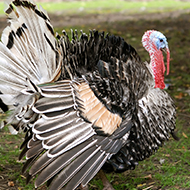
Scientists inserted avian influenza into the turkey herpesvirus that is used in Marek's disease vaccines.

Gene-editing technique faster than previous methods

A vaccine that offers birds protection against Marek’s disease and avian influenza has been developed by scientists at The Pirbright Institute.


Writing in the journal Vaccines, scientists describe how they used a gene-editing technique (CRISPR/Cas9 ) to insert avian influenza into the turkey herpesvirus (HVT) that is used in Marek’s disease vaccines.


The gene codes for haemagglutinin (HA) - an influenza protein that plays a vital role in the virus’ ability to infect host cells and a key target of the host immune response to block infection.


Professor Munir Iqbal, head of the Avian Influenza group at Pirbright, explains: “HVT is already widely used in vaccines against Marek’s disease and can be administered to eggs, enabling automated delivery and providing birds with protection from the day they hatch.

“The additional HA gene we have incorporated will be expressed by HVT when it replicates in host cells, meaning that a single dose of vaccine induces immunity against both viruses."


Compared to previous methods, the new technique is faster, more efficient, and will reduce the time it takes for poultry producers to update vaccine strains. This will enable a quicker response to disease outbreaks and provide better protection.


Prof Iqbal continued: “The genetic engineering process we have developed using CRISPR/Cas9 is far quicker and more efficient than previous technologies, as well as being very consistent and accurate. These attributes are essential for providing fast and reliable vaccine production to protect poultry.


“Improving how we make vaccines is critical for preventing avian influenza outbreaks. Our work could help reduce the spread of disease between birds and reduce the risk of infection for people who work closely with poultry."

Become a member or log in to add this story to your CPD history

New RCVS Academy courses to remove barriers in vet care

News Story 1
 The RCVS Academy has launched two courses to its new client support series, as it seeks to improve accessibility in veterinary settings.

The courses will help professionals to support assistance dog partnerships and clients with hearing loss.

The Hearing loss and Assistance dogs courses saw RCVS project lead Catherine Hemingway collaborate with the British Deaf Association and Assistance Dogs UK. Vets will gain practical guidance on supporting clients with additional needs.

Each course takes an hour to complete, and can be accessed by RCVS registrants for free. 

Click here for more...
News Shorts
APHA launches free virtual work experience programme

The Animal and Plant Health Agency (APHA), in collaboration with Springpod, has launched a free virtual work experience programme, giving young people across the UK the chance to explore careers dedicated to protecting animal and plant health.

The on-demand programme offers a unique insight into career opportunities within APHA, showcasing how students can contribute to tackling some of the UK's most critical biosecurity and environmental challenges.

Designed for students aged 13 and over, the course includes more than 10 hours of engaging content featuring real-life industry insights, scenario-based challenges, and practical guidance on applying for jobs. To register for the course, visit the APHA website.

