
Your data on MRCVSonline
The nature of the services provided by Vision Media means that we might obtain certain information about you.
Please read our Data Protection and Privacy Policy for details.

In addition, (with your consent) some parts of our website may store a 'cookie' in your browser for the purposes of
functionality or performance monitoring.
Click here to manage your settings.
If you would like to forward this story on to a friend, simply fill in the form below and click send.

Your friend's email:
Your email:
Your name:
 
 
Send Cancel

Marek’s disease and avian influenza vaccine developed
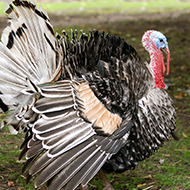
Scientists inserted avian influenza into the turkey herpesvirus that is used in Marek's disease vaccines.

Gene-editing technique faster than previous methods

A vaccine that offers birds protection against Marek’s disease and avian influenza has been developed by scientists at The Pirbright Institute.


Writing in the journal Vaccines, scientists describe how they used a gene-editing technique (CRISPR/Cas9 ) to insert avian influenza into the turkey herpesvirus (HVT) that is used in Marek’s disease vaccines.


The gene codes for haemagglutinin (HA) - an influenza protein that plays a vital role in the virus’ ability to infect host cells and a key target of the host immune response to block infection.


Professor Munir Iqbal, head of the Avian Influenza group at Pirbright, explains: “HVT is already widely used in vaccines against Marek’s disease and can be administered to eggs, enabling automated delivery and providing birds with protection from the day they hatch.

“The additional HA gene we have incorporated will be expressed by HVT when it replicates in host cells, meaning that a single dose of vaccine induces immunity against both viruses."


Compared to previous methods, the new technique is faster, more efficient, and will reduce the time it takes for poultry producers to update vaccine strains. This will enable a quicker response to disease outbreaks and provide better protection.


Prof Iqbal continued: “The genetic engineering process we have developed using CRISPR/Cas9 is far quicker and more efficient than previous technologies, as well as being very consistent and accurate. These attributes are essential for providing fast and reliable vaccine production to protect poultry.


“Improving how we make vaccines is critical for preventing avian influenza outbreaks. Our work could help reduce the spread of disease between birds and reduce the risk of infection for people who work closely with poultry."


Become a member or log in to add this story to your CPD history

Defra shares new Sanitary and Phytosanitary guidance

News Story 1
 Defra has published guidance for the vet sector ahead of a proposed UK-EU Sanitary and Phytosanitary agreement.


The agreement, which will change the movement and trade of animals and related products, could see reductions in checks, paperwork and certification. As well as describing regulatory developments, the advice highlights the importance of animal ID, registration and traceability in disease control and other compliance arrangements.

The guidance can be found here. More detail is expected as negotiations progress. 

Click here for more...
News Shorts
BSAVA publishes fifth Manual of Canine and Feline Neurology

The BSAVA has published the fifth edition of its BSAVA Manual of Canine and Feline Neurology.

The new edition has been reviewed and updated, including new developments in diagnostics, therapeutic approaches and clinical decision-making. It is structured to support clinicians through diagnosis, treatment and long-term management.

The guide features five new chapters covering acute myelopathies, chronic myelopathies, emergency protocols, neurotoxicology and neuro-oncology.

It also includes over 100 videos, including demonstrations of neurological examinations, clinical presentations and diagnostic procedures.

Nicola Lloyd, publishing manager, said: "Whether you're a general practitioner seeking practical guidance, or a specialist aiming to refine your expertise, this edition remains an indispensable reference for anyone involved in the care of neurologically compromised dogs and cats."