


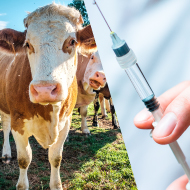
Vaccine compatible with synthetic PPD skin test
Researchers at the University of Surrey have produced a novel vaccine and complementary skin test to protect cattle against bovine Tb (bTB).
The vaccine, reported in the journal Scientific Reports, is the first to be compatible with a synthetic version of the tuberculin skin test (PPD), a test that is legally required in the UK for the surveillance of TB in cattle.
Researchers say the discovery could allow farmers and veterinary surgeons to protect their animals with the new BCG vaccine, while still maintaining a diagnostic test that will detect TB.
“In order to control the spread of bovine TB, effective vaccination and accurate early diagnosis of the disease are critical,” said Johnjoe McFadden, Professor of Molecular Genetics at the University of Surrey. “This new vaccine provides protection against bovine TB and will help in the fight against this deadly disease which infects over 50 million cattle worldwide and is economically devastating to farmers.”
The BCG vaccine is currently used to protect humans and is effective in cattle. However, it is incompatible with the PPD skin test. Cattle that receive the BCG vaccine - which contains a harmless strain of Mycobacterium bovis - produce a positive PPD test that makes it impossible to tell if the animal has TB or has been vaccinated against the disease.
It is for this reason that the BCG vaccine is banned in most countries, meaning vets continue to use the PPD skin test to diagnose the disease in cattle.
In this latest study, researchers set out to create a new strain of the BCG vaccine that lacks some of the proteins shared with Mycobacterium bovis. They did this by injecting cows with BCG strains that had each lost a single gene and measured the survival rates.
By employing this method, the researchers were able to identify genes that could be removed from BCG, without compromising its ability to work as a live vaccine.
The team deleted the dispensable genes from the BCG chromosome to make a BCG-minus strain. The deleted proteins were then used to develop a new synthetic skin test that would be positive for animals exposed to TB, but negative for animals vaccinated against the BCG-minus strain.
Subsequent tests of the synthetic PPD test on guinea pigs revealed that those infected with TB tested positive for the disease. Guinea pigs vaccinated with the BCG-minus vaccine, however, did not.
“The next stage of our work will be to demonstrate that both synthetic skin test and BCG-minus vaccine works in cattle herds,” professor McFadden continued. “If they do, then it will be possible to vaccinate cattle against TB yet retain the value of skin test for diagnosis.”


 Companies marketing medicines for small pets exempt from authorisation must submit their annual return to the Veterinary Medicines Directorate (VMD) by 30 November 2026.



