


Climate change evokes individual responses in sheep and goats
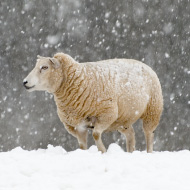
There are significant variations in how individuals respond to fluctuating weather conditions
A study, led by Scotland’s Rural College (SRUC), has looked at ways of breeding sheep and goats to cope with climate change. Researchers studied animal performance records together with weather data – including the average daily temperature and humidity – and found significant variations in how individual animals respond to fluctuating weather conditions.
Researchers found the same weather change invoked a variety of responses in different animals, while the production of some was not affected at all – making them more resilient to climate change. With a significant proportion of the observed variation being genetic and heritable, researchers concluded that animal resilience to weather change could be improved through selective breeding.
The study is part of the Horizon2020 project iSAGE – a multi-million pound EU-funded research project aimed at future-proofing the sheep and goat farming industry.
SRUC professor, Georgios Banos, said the results of the study, published in BMC Genetics, could be used to further improve the accuracy of selective breeding, leading to the enhanced sustainability and profitability of farms.
“Climate is changing, bringing about increased weather volatility and farm animals have different capacities to cope with this change,” he said. “We investigated the genetic mechanisms that make an animal resilient to weather conditions, allowing it to maintain performance when challenged with weather volatility.
“This will enable us to continue selectively breeding for enhanced performance – such as high production and health – and at the same time breed for performance stability when external environmental conditions change.”
The iSAGE project, which runs until 2020, is a consortium involving 34 partners from the UK, France, Finland, Spain, Italy, Greece and Turkey, coordinated by the School of Veterinary Medicine at the Aristotle University of Thessaloniki in Greece. SRUC’s focus is on creating practical breeding goals and tools for the sheep and goat sector in both the UK and across Europe.


 Two independent vets have launched a podcast to help owners strengthen their bond with pets. Dr Maggie Roberts and Dr Vanessa Howie, who have worked in both veterinary practice and major charities, are keen to use their experience to enable people to give pets a better life.



