


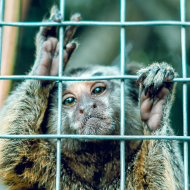
Current laws are not protecting monkeys from abuse or neglect
Animal welfare minister Zac Goldsmith has launched a call for evidence on primates kept as pets as part of government efforts to improve animal welfare.
The government is seeking views on the welfare of primates kept as pets in England, including opinions on restricting ownership, sales and breeding of primates. It builds on reforms introduced in October last year, meaning anyone trading in pets, both online and offline, will be subject to the same strict licensing conditions as other breeders and pet shops.
Mr Goldsmith said: “Primates are very intelligent and curious wild animals with highly complex welfare and social needs which must be respected. Through the extraordinary work of Monkey World’s Dr Alison Cronin, I have seen first-hand how keeping them as pets can cause immense suffering.
“That is why the government is today launching this crucial call for evidence to help understand how we can better protect these wild animals. If the evidence supports it, I will ask the department to draw up a consultation on banning the practice.
“This action is part of our strong commitment to protecting animals and follows steps we have already taken, including banning wild animals in travelling circuses and a commitment to increasing maximum sentencing for animal cruelty from six months to five years.”
According to figures released by the RSPCA, there are between 4,000 and 5,000 primates currently kept as pets in the UK. Among these include lemurs, monkeys and apes.
Those in favour of a ban say that primates’ complex behaviour and welfare needs cannot be met in a domestic environment. Under the Animal Welfare Act, it is an offence to keep a primate while not meeting their specific welfare needs.
Monkey World CEO Dr Alison Cronin MBE said: “Monkey World has rescued primates from the British pet trade for more than 30 years, and we have experienced a dramatic increase in the numbers. We have rescued 72 in the last 10 years, and now have a waiting list numbering more than 100.
“Current laws are not protecting the monkeys from abuse or neglect, as they arrive at the park malnourished, with rickets, mobility problems and psychologically damaged as a result of living in solitary confinement, inside people’s houses.
“Many people are also victim of this unnecessary trade when they are taken in by unscrupulous dealers, scam ads and social media pressure. We are asking people to let DEFRA know that this trade is unacceptable and the current legislation is not working. The laws must change.”
To respond to this call for evidence email AnimalWelfare.Consultations@defra.gov.uk including any supporting documents. The closing date for evidence is 5pm on 16 January 2020.


 Defra has published guidance for the vet sector ahead of a proposed UK-EU Sanitary and Phytosanitary agreement.



