


Return of the reds
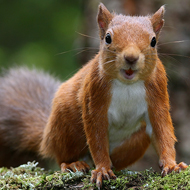
Introduction of red squirrels benefits the expansion of native forests
Conservation charities Trees for Life and Woodland Trust Scotland have partnered to return red squirrels to a Sutherland wood.
The releases at Woodland Trust Scotland’s Ledmore and Migdale Woods are the latest phase of a successful ‘Trees for Life’ red squirrel reintroduction project across the Scottish Highlands, which is now moving into Sutherland for the first time.
In a drive to help red squirrels extend their range further north, around 20 reds from thriving populations in Inverness-shire and Moray will be relocated to the Woodland Trust site near the village of Spinningdale on the shore of Dornoch Firth during October and November. Critically, the region is free of grey squirrels.
Urgent action is needed to secure the long-term future of the increasingly rare red squirrel in the UK, where only an estimated 138,000 survive, including some 120,000 in Scotland. Numbers of the much-loved mammals have been decimated by reduction of their forest homes to isolated fragments, and by competition and lethal disease from non-native grey squirrels.
Because reds travel between trees and avoid crossing large open spaces, they can’t return to now-isolated woodlands on their own – so the species is missing from many suitable Highland woods.
New populations of red squirrels already established by ‘Trees for Life’ – following the charity’s reintroduction of 140 animals across several Highland locations between 2016 and 2018 – have been successfully breeding and spreading into wider areas.
The Spinningdale releases this autumn are Trees for Life’s northernmost release site to date. Previous relocations of squirrels from their strongholds in Inverness-shire and Moray were to forest fragments at Shieldaig, the Coulin Estate near Kinlochewe, Plockton, Inverewe, the Reraig peninsular, Attadale and Letterewe.
Sutherland is home to an expanding population of red squirrels, following a relocation of 36 animals to the Alladale, Amat and Croick estates by the Highland Foundation for Wildlife and others in 2013, but the species currently remains missing from much of the northern Highlands.
Next spring, Trees for Life plans to extend the reds’ range further west by releasing another 30 animals in the Morvern peninsular. The charity then aims to reintroduce reds to another two woodlands in the northwest Highlands by spring 2021, with at least one of these sites – which have yet to be confirmed – being further north in Sutherland or Caithness.
Increasing red squirrel numbers also benefits the expansion of native forests, because the squirrels collect and bury thousands of tree seeds each autumn, which often lie forgotten and take root.
Animal welfare is paramount during the reintroductions. The squirrels are transported in hay-lined nest boxes that are fixed to trees at the release sites, with grass-filled exit holes allowing the squirrels to leave when ready. Food is provided for several months as the squirrels get used to their new habitat. Annual monitoring involves observations of feeding signs, drey surveys and sightings records.
Only small numbers of red squirrels are removed from any site during the relocations, leaving donor populations unaffected. Health checks ensure that only healthy animals are introduced to new populations.
Trees for Life is a conservation charity dedicated to rewilding the Scottish Highlands. So far its volunteers have established nearly two million native trees at 44 sites across the Highlands, encouraging wildlife to flourish and helping communities to thrive.


 Companies marketing medicines for small pets exempt from authorisation must submit their annual return to the Veterinary Medicines Directorate (VMD) by 30 November 2026.



