Your data on MRCVSonline
The nature of the services provided by Vision Media means that we might obtain certain information about you.
Please read our Data Protection and Privacy Policy for details.

In addition, (with your consent) some parts of our website may store a 'cookie' in your browser for the purposes of
functionality or performance monitoring.
Click here to manage your settings.
If you would like to forward this story on to a friend, simply fill in the form below and click send.

Your friend's email:
Your email:
Your name:
 
 
Send Cancel

Vets urged to talk to clients about electric fences
BVA recognises that electric fences are necessary for many clients, but calls for more research into non-harmful alternatives.

BVA makes recommendations on safe and responsible use  

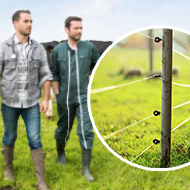
The BVA is encouraging vets to speak to their equine and farm clients about safe and responsible use of electric containment fences.

In a new position statement, launched this week, the BVA recognises that electric fences are necessary for many clients, but calls for more research into non-harmful alternatives for containing livestock and horses.

In the meantime, the organisation has made 13 recommendations to limit potential harm to humans and animals. Top tips include ensuring the strength of current is appropriate, maintaining batteries, attaching flags to fencing to make it visible and training animals to get used to fencing.

BVA president Simon Doherty said: “As vets, we know that electric containment fences are often a necessary part of rural life to allow animals to graze safely and efficiently. But we also recognise that they can harm or injure animals, especially if not correctly designed, installed or maintained.
 
“In our newly published position, we’re encouraging further research into alternative, non-harmful ways to contain livestock and horses. Until then, we’re supporting the responsible use of electric containment fences by providing vets with some top tips and references to kickstart conversations with their clients."

Summary of BVA recommendations:

  • signpost to best practice guidance such as: National Equine Welfare Council (NEWC) Equine Industry Welfare Guidelines Compendium for Horses, Ponies and Donkeys and AHDB Electric fencing for livestock guidance
  • make sure the strength of current is appropriate for the species to avoid severe shocks
  • carefully maintain batteries used to power electric fences to avoid any damage that could cause leakage, environmental hazards or potential toxicity in livestock
  • attach flags to fencing or other visual markers to make sure that the fence is visible to livestock and horses
  • use highly visible tape- or rope-like electric fencing for horses
  • train livestock and horses so that they can get used to fencing in a controlled environment. Guidance on training livestock is available in the AHDB Electric Fencing for Livestock Guidance
  • quickly identify, monitor and remove animals who do not respond to training.



Become a member or log in to add this story to your CPD history

Equine Disease Surveillance report released for Q4 2025

News Story 1
 The latest Equine Disease Surveillance report has been released, with details on equine disease from Q4 of 2025.

The report, produced by Equine Infectious Disease Surveillance, includes advice on rule changes for equine influenza vaccination.

Statistics and maps detail recent outbreaks of equine herpes virus, equine influenza, equine strangles and equine grass sickness. A series of laboratory reports provides data on virology, bacteriology, parasitology and toxicosis.

This issue also features a case study of orthoflavivus-associated neurological disease in a horse in the UK. 

Click here for more...
News Shorts
RCVS members invited to question Council candidates

RCVS members have been invited to submit questions to candidates for this year's RCVS Council election.

With 15 candidates standing for three available positions, vets have been invited to submit a question of their choosing before voting starts. These questions will be collated, with each candidate answering one question of their choice.

It is recommended that members read the candidates' biographies and statements before submitting questions. One question per member can be submitted to vetvote26@rcvs.org.uk before Wednesday, 25 February 2026.

The RCVS Council election is due to start in March.

With only two candidates for two positions on the VN Council, there will be no VN Council elections this year. Meghan Conroy RVN and Lauren Hargrave RVN will begin their three year terms at RCVS' AGM in July.