


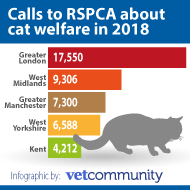
The RSPCA has revealed its cruelty line receives one call every four minutes from members of the public who are concerned about cat welfare.
Greater London is a particular hotspot, with the charity recording 17,550 calls from the area last year. Following on from this is the West Midlands (9,306 calls), Greater Manchester (7,300), West Yorkshire (6,588) and Kent (4,212).
In total, the charity received 134,537 calls about cat welfare in 2018. The figures have been released to mark International Cat Day today (8 August).
The RSPCA said it also rescues more cats than any other animal, whether they have got stuck in a tight spot or been abandoned, neglected or abused.
In a bid to raise awareness of the plight of cats, RSPCA’s cat welfare expert Alice Potter said: “It’s sad to see that we have received so many calls about cats in need.
“Cats end up needing our help for a variety of reasons, for example their natural curiosity can mean they need rescuing when they get into scrapes and tricky situations. There are also some real issues that we see time and again including cats and kittens being abandoned, cats having unplanned and unwanted pregnancies due to a lack of neutering and multi-cat households where breeding has sadly become out of control.
“However, there are many cats who are much luckier and are very much a part of the family and loved by their owners who understand their likes and dislikes, their little quirks and routines. Every cat is an individual but there are some signs we can look out for to see how our cats are feeling through understanding their body language and behaviour to ensure they are happy and healthy.”
The charity has put together some top tips for cat owners:
- Cats who are feeling anxious or fearful often like to hide away - this can help them cope better. Always ensure your cat has lots of cosy hiding places around the house.
- A cat who is feeling friendly and happy to meet you will approach with their tail held upright with the tip of the tail curved. Most cats prefer to initiate any interaction so give them time to come to you.
- Rolling over onto their back and showing their tummy can be a sign your cat feels comfortable and safe around you. This is not however, an invitation to rub their belly! Most cats do not enjoy a belly rub and may react defensively. Instead, you may like to give them a gentle stroke on their head or cheeks.
- Look out for any changes in your cats usual behaviour, for example changes to their eating toileting or sleeping habits - any change may indicate that something isn’t right and you may need to seek advice from your vet.

 The latest



