
Your data on MRCVSonline
The nature of the services provided by Vision Media means that we might obtain certain information about you.
Please read our Data Protection and Privacy Policy for details.

In addition, (with your consent) some parts of our website may store a 'cookie' in your browser for the purposes of
functionality or performance monitoring.
Click here to manage your settings.
If you would like to forward this story on to a friend, simply fill in the form below and click send.

Your friend's email:
Your email:
Your name:
 
 
Send Cancel

Pet trackers gather more data about owners than pets - study
Researchers analysed the data captured by 19 wearable devices that are currently available to consumers.

Devices may lead owners into a false sense of security  

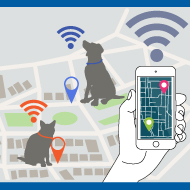
Pet wearable devices gather more data about owners rather than pets, according to new research.

A study by the Bristol Cyber Security Group found that wearables do not always acknowledge the privacy implications for humans and their data and that they could be used to build personal profiles on pet owners.

The research was carried out by researchers at the Universities of Bristol and Haifa, Israel, and peer-reviewed in the journal IEEE Security & Privacy.


“The consumer’s desire to provide the best care for their pets combined with the marketing of the device may lull them into a false sense of security,” said lead researcher Dr Dirk van der Linden. “It is the owner who is the actual user of the product, and the data collected from the pet wearable has privacy implications for the humans.”


He continued: “Access to pet activity data could be used to build profiles on pet owners, with implications ranging from burglars knowing when to approach a home, to insurance companies inferring health profiles of pet owners via their dog’s activity.”


In the study, researchers analysed the data captured by 19 wearable devices that are currently available to consumers. They found that data gathered on the pet owner is four times higher than that of their pet. There also appeared to be a lack of clarity on the type of data that is stored.

The researchers also found that just six out of the 19 devices are compliant with the General Data Protection Regulation (GDPR).

Furthermore, there was a clear discrepancy between the marketing of the devices and the data captured. Seven of the 19 devices tested had a location tracking function but did not detail any location in their privacy policy.


The paper calls for clearer marketing of the devices and explicitly marking pet activity data as personal data to ensure more transparency for users.

Become a member or log in to add this story to your CPD history

New RCVS Academy courses to remove barriers in vet care

News Story 1
 The RCVS Academy has launched two courses to its new client support series, as it seeks to improve accessibility in veterinary settings.

The courses will help professionals to support assistance dog partnerships and clients with hearing loss.

The Hearing loss and Assistance dogs courses saw RCVS project lead Catherine Hemingway collaborate with the British Deaf Association and Assistance Dogs UK. Vets will gain practical guidance on supporting clients with additional needs.

Each course takes an hour to complete, and can be accessed by RCVS registrants for free. 

Click here for more...
News Shorts
APHA launches free virtual work experience programme

The Animal and Plant Health Agency (APHA), in collaboration with Springpod, has launched a free virtual work experience programme, giving young people across the UK the chance to explore careers dedicated to protecting animal and plant health.

The on-demand programme offers a unique insight into career opportunities within APHA, showcasing how students can contribute to tackling some of the UK's most critical biosecurity and environmental challenges.

Designed for students aged 13 and over, the course includes more than 10 hours of engaging content featuring real-life industry insights, scenario-based challenges, and practical guidance on applying for jobs. To register for the course, visit the APHA website.

