


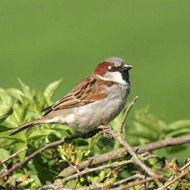
Nearly 75 per cent of London’s iconic sparrows are infected - study
Avian malaria could be responsible for drastic declines in London’s house sparrow, scientists have said.
House sparrow populations in London have plummeted by 71 per cent since 1995. In a bid to explain this sudden decline, researchers from the Zoological Society of London (ZSL), RSPB, British Trust for Ornithology (BTO) and the University of Liverpool, began investigations to see if parasitic infections could be the cause.
Their findings suggest that 74 per cent of house sparrows in London carry avian malaria - more than any other bird population in Northern Europe.
Out of the 11 bird colonies studied, seven were in decline. On average nearly three-quarters of the birds carried avian malaria, but this varied between groups, with some as high as 100 per cent. However, scientists said it was the number of parasites per bird that varied significantly and was found to be higher in declining colonies.
Lead author Dr Daria Dadam said: “Parasite infections are known to cause wildlife declines elsewhere and our study indicates that this may be happening with the house sparrow in London. We tested for a number of parasites, but only Plasmodium relictum, the parasite that causes avian malaria, was associated with reducing bird numbers.”
Malaria strains identified in the study are widespread and infect multiple bird species, suggesting they are likely to be native to the UK. It is thought these strains also infected house sparrows long before they began to decline, which raises the question of why bird populations are now being affected in this way.
Researchers believe climate change could be responsible, with higher temperatures and wetter weather creating favourable conditions for mosquitos, which spread the parasite when they bite to feed.
Dr Will Peach, RSPB’s head of research delivery said: “House sparrow populations have declined in many towns and cities across Europe since the 1980s. This new research suggests that avian malaria may be implicated in the loss of house sparrows across London. Exactly how the infection may be affecting the birds is unknown.
“Maybe warmer temperatures are increasing mosquito numbers, or the parasite has become more virulent.”
Image © John Harding


 Defra has published guidance for the vet sector ahead of a proposed UK-EU Sanitary and Phytosanitary agreement.



