


Dogs fight for dominance in the middle of the pack - study
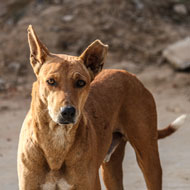
The study observed 27 mongrels that wandered freely around the suburbs of Rome.
Scientists studying a pack of wild dogs have observed high levels of aggression in the middle of the dominance hierarchy.
Top dogs in a pack are known to display dominance-related aggression. But researchers believe that dogs in the middle tier may also show this behaviour, as they try to work out their place in the crowded middle.
The study was carried out by researchers at the University of Exeter and the Veterinary Service of the Local Health Unit Rome 3 (Italy).
“Our results reveal the unavoidable costs of climbing a dominance hierarchy,” explains Dr Matthew Silk from the University of Exeter. “In the middle of the hierarchy – where it’s harder to predict which animal should be dominant – we see lots of aggression.”
Published in Proceedings of the Royal Society B, the study observed 27 mongrels that wandered freely around the suburbs of Rome. The dogs did not live with humans but did rely on them for food.
After a year, researchers concluded the group’s hierarchy was based on age and sex, with adults dominant over younger dogs and males dominant over females of the same age group.
“Although fights within a social group of free-roaming dogs are usually characterised by low-intensity aggression, the middle of the hierarchy is occupied by young males of similar size and age, among whom nothing is definitive and for whom the challenge is to gain rank,” explained Dr Simona Cafazzo, of the University of Veterinary Medicine, Vienna.
Dr Eugenia Natoli, of the Veterinary Service of the Local Health Unit Rome 3 added: “Our results confirm that these dogs have an age-graded dominance hierarchy similar to that of wolves.”


 HMRC has invited feedback to its communications regarding the employment status of locum vets and vet nurses.



