
Your data on MRCVSonline
The nature of the services provided by Vision Media means that we might obtain certain information about you.
Please read our Data Protection and Privacy Policy for details.

In addition, (with your consent) some parts of our website may store a 'cookie' in your browser for the purposes of
functionality or performance monitoring.
Click here to manage your settings.
If you would like to forward this story on to a friend, simply fill in the form below and click send.

Your friend's email:
Your email:
Your name:
 
 
Send Cancel

Blowfly risk “High” across much of the UK
"Strike risk will rise throughout July, spreading across the whole country" - Professor Richard Wall, copiler of the Blowfly Risk Alerts.

Farmers urged to be vigilant against this devastating disease

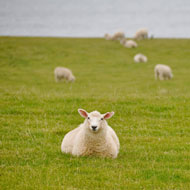
Risk levels for blowfly are “High” across much of the UK, according to the latest update from the National Animal Disease Information Service (NADIS) and Elanco.

The real-time update shows risk levels are high throughout East Anglia, the Midlands, South England, North West England, North Wales, South West England and South Wales.

Some locations are also showing as “Medium", including North West Scotland, East Scotland, North East England, South West Scotland and Northern Ireland.

"As we know, hot and humid weather creates ideal conditions for strike,” said Richard Wall, professor of zoology and compiler of the Blowfly Risk Alerts. “Fortunately, the fly population is still relatively small because of the cool conditions in May. That will now start to change quickly.”

“Strike risk will rise throughout July, spreading across the whole country. In particular, lambs and ewes that remain unsheared will be in jeopardy. We're entering the highest period of risk for blowfly. Being vigilant and prepared is essential.”

Blowfly experts are now urging farmers to treat their flocks early in the year to prevent a build-up of flies and to reduce the devastating impact of blowfly strike.

Independent sheep veterinary consultant Dr Fiona Lovatt said: “Many farmers will wait and treat later due to perceived savings in treatment cost, but this is a false economy as the duration of efficacy for some products is so long anyway,” she said. "Treating earlier in the year means a smaller lamb and so potentially a smaller dose, which is a genuine saving."

In April 2018, an Elanco blowfly study conducted in partnership with the National Farm Research Unit found that 99 per cent of farmers have suffered financial losses as a result of blowfly stroke. More than 80 per cent agreed that blowfly season is increasing, with strike cases being reported as early as February and as late as November.

Become a member or log in to add this story to your CPD history

Equine Disease Surveillance report released for Q4 2025

News Story 1
 The latest Equine Disease Surveillance report has been released, with details on equine disease from Q4 of 2025.

The report, produced by Equine Infectious Disease Surveillance, includes advice on rule changes for equine influenza vaccination.

Statistics and maps detail recent outbreaks of equine herpes virus, equine influenza, equine strangles and equine grass sickness. A series of laboratory reports provides data on virology, bacteriology, parasitology and toxicosis.

This issue also features a case study of orthoflavivus-associated neurological disease in a horse in the UK. 

Click here for more...
News Shorts
RCVS members invited to question Council candidates

RCVS members have been invited to submit questions to candidates for this year's RCVS Council election.

With 15 candidates standing for three available positions, vets have been invited to submit a question of their choosing before voting starts. These questions will be collated, with each candidate answering one question of their choice.

It is recommended that members read the candidates' biographies and statements before submitting questions. One question per member can be submitted to vetvote26@rcvs.org.uk before Wednesday, 25 February 2026.

The RCVS Council election is due to start in March.

With only two candidates for two positions on the VN Council, there will be no VN Council elections this year. Meghan Conroy RVN and Lauren Hargrave RVN will begin their three year terms at RCVS' AGM in July.

