


Antimicrobial properties found in scorpion venom
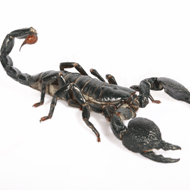
The study highlights the potential for other healing compounds to be identified in the toxins of scorpions, snakes, snails and other creatures. (Stock photo)
Scientists have discovered two healing compounds in scorpion venom that can kill staphylococcus and drug-resistant TB bacteria.
The scorpion, Diplocentrus melici (not pictured), is native to eastern Mexico and can only be found in the rainy season - it is buried during the winter and dry seasons. When researchers milked its venom, they noticed they it changed from clear to brownish in colour when exposed to the air.
Two chemical compounds were found to be responsible for the colour change, one of which turned red when exposed to air, the other blue. The compounds are two previously unknown benzoquinones, a class of ring-like molecules known to have antimicrobial properties.
Through much trial and error, the team - which comprised researchers from Stanford and Mexico - managed to synthesise the compounds. The red benzoquinone was particularly effective at killing staphylococcus bacteria, while the blue one was lethal to both normal and multi-drug-resistant strains of TB-causing bacteria.
Researchers said being able to synthesise the venom is highly important, as the amount of venom components that can be obtained from animals is extremely low.
The team are planning to work together in determining why the compounds are present in the venom and whether they can be transformed into drugs. Their findings have been published in the journal Proceedings of the National Academy of Sciences.


 Eligible members of BEVA will be able to vote for their Council team until Monday, 17 August 2026. Members will have received an election email on 17 July.



