


Dolphins ‘form friendships based on shared interests’
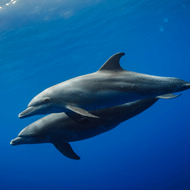
An international research team studied 124 male dolphins at Shark Bay. (Stock photo)
New research suggests dolphins form friendships based on shared interests, in a similar way to humans.
An international research team studied 124 male dolphins at Shark Bay, a World Heritage area in Western Australia, which is home to an iconic population of Indo-Pacific bottlenose dolphins.
Shark Bay is the only place where dolphins have been observed using marine sponges as foraging tools, a learnt technique passed down from one generation to the next. It allows certain dolphins, known as ‘spongers’, to find food in deeper water channels.
Using behavioural, genetic and photographic data collected during the winter months over a nine-year period (2007-2015), the team analysed a sub-set of 37 male dolphins, comprising 13 spongers and 24 non-spongers.
They found that male spongers spent more time associating with other male spongers than non-spongers. These bonds were based on similar foraging techniques, not relatedness or other factors.
Co-author Dr Simon Allen, of the University of Bristol, said: "Foraging with a sponge is a time-consuming and largely solitary activity so it was long thought incompatible with the needs of male dolphins in Shark Bay – to invest time in forming close alliances with other males.
“This study suggests that, like their female counterparts and indeed like humans, male dolphins form social bonds based on shared interests.”
Manuela Bizzozzero, lead author of the study at the University of Zurich, added: "Male dolphins in Shark Bay exhibit a fascinating social system of nested alliance formation. These strong bonds between males can last for decades and are critical to each male’s mating success.
“We were very excited to discover alliances of spongers, dolphins forming close friendships with others with similar traits."


 Eligible members of BEVA will be able to vote for their Council team until Monday, 17 August 2026. Members will have received an election email on 17 July.



