


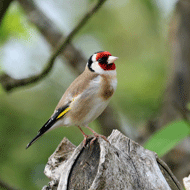
Forty-year study links feeding with rise in numbers and diversity
The popular pastime of feeding garden birds appears to have led to an increase in the population of several species, and the diversity of species visiting feeders.
This is according to a new study by the British Trust for Ornithology (BTO).
Researchers analysed data from the BTO’s Garden Bird Feeding Survey, alongside information from advertising in the RSPB Birds magazine over a 40-year period, to show how the number and variety of food products has risen in this time.
Findings suggest that in the 1970s, garden bird feeders were dominated by two species, the house sparrow and starling.
Today, a broader range of species are commonly seen at feeders, with particularly marked changes in goldfinches and wood pigeons. In 1973, fewer than 20 per cent of survey participants reported these species at their feeders, but this number has now jumped to 80 per cent.
Population increases were not seen in species that do not visit garden feeders, however.
BTO said garden feeding is ‘almost certainly reshaping entire bird communities’ but the large-scale, long-term effects on community ecology are not known.
The charity added: ‘Urban areas of Britain are consequently nurturing growing populations of feeder-using bird species, while the populations of species that do not use feeders remain unchanged. Our findings illustrate the on-going, gross impact people can have on bird community structure across large spatial scales.’


 Veterinary practices are being urged to help owners safely dispose of any unused and expired pet medicines - not just antibiotics - during November's Animal Medicines Amnesty.



