
Your data on MRCVSonline
The nature of the services provided by Vision Media means that we might obtain certain information about you.
Please read our Data Protection and Privacy Policy for details.

In addition, (with your consent) some parts of our website may store a 'cookie' in your browser for the purposes of
functionality or performance monitoring.
Click here to manage your settings.
If you would like to forward this story on to a friend, simply fill in the form below and click send.

Your friend's email:
Your email:
Your name:
 
 
Send Cancel

ASF detected in Hong Kong slaughterhouse
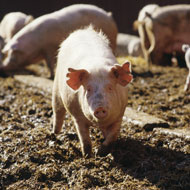
The virus was detected in tissue samples collected from the condemned carcass of an imported pig.(Stock photo)
Culling of 6,000 pigs underway following protests 

African swine fever has been confirmed in a Hong Kong slaughterhouse for the first time, the country’s chief veterinary officer has confirmed.

The virus was detected in tissue samples collected from the condemned carcass of an imported pig.

Operations at the Sheung Shui Slaughterhouse have been suspended since the outbreak on 10 May, according to the World Organisation for Animal Health (OIE).

Hong Kong’s agriculture, fisheries and conservation department revealed last week that the pig was imported from Zhanjiang in China’s Guangdong province.

According to media reports, the batch including the infected pig had already been released to the market before the disease was confirmed.

Sophia Chan, secretary of the city’s food and health department, is quoted in the press as saying all pigs at the slaughterhouse would be culled so that thorough cleansing and disinfection could be carried out.

Plans to cull the 6,000 pigs were initially hindered by pork traders who threatened to stand guard overnight to prevent officials entering the slaughterhouse. An agreement was reached during talks on Sunday (12 May), meaning authorities began culling operations at the slaughterhouse yesterday (13 May).

Affected pork traders could be compensated HK$20 million, EJ Insight reported.

Become a member or log in to add this story to your CPD history

Equine Disease Surveillance report released for Q4 2025

News Story 1
 The latest Equine Disease Surveillance report has been released, with details on equine disease from Q4 of 2025.

The report, produced by Equine Infectious Disease Surveillance, includes advice on rule changes for equine influenza vaccination.

Statistics and maps detail recent outbreaks of equine herpes virus, equine influenza, equine strangles and equine grass sickness. A series of laboratory reports provides data on virology, bacteriology, parasitology and toxicosis.

This issue also features a case study of orthoflavivus-associated neurological disease in a horse in the UK. 

Click here for more...
News Shorts
Applications open for BEVA Back in the Saddle

The British Equine Veterinary Association (BEVA) has opened applications for its 'Back in the Saddle' coaching programme.

The online scheme offers structured group coaching for members wanting to reflect on their career path and regain clarity. Members may be returning to work after leave, uncertain about next steps or reassessing direction.

Attendees will benefit from impartial guidance and practical tools to support their professional development. Members are encouraged to take a 'proactive, future-focused approach' to their careers.

The sessions, taking place on Wednesdays from 7.30pm-9pm, are open to BEVA members with more than five years' experience. The first session takes place on Wednesday, 3 June 2026.

Applications will close on Wednesday, 27 May 2026.

