


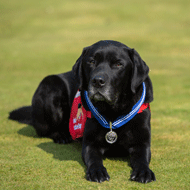
Pal transformed the life of his owner, who suffered diabetes and PTSD
A medical detection dog has been awarded the PDSA Order of Merit - the animal equivalent of an OBE - in recognition of his life-changing work.
Eight-year-old Labrador Pal received his award during a special ceremony at Leeds Castle in Kent, after supporting his owner Claire Pearson for seven years.
Claire was diagnosed with type 1 brittle diabetes at birth, but fell seriously ill with end-stage renal failure in 2003. As a result she needed a pancreas and kidney transplant, as well as dialysis three times a week.
She was rendered unable to tell when she was hypoglycaemic, meaning her young children would often return home from primary school to find her collapsed. Her two sons became carers by default and Claire was plunged into severe depression and post-traumatic stress disorder, becoming unable to leave the house alone.
Years later, as her family’s plight became increasingly desperate, she saw an advert for the charity Medical Detection Dogs and applied for help. She was introduced to Pal in 2012 and since then, he has alerted her to more than 12,000 separate blood sugar changes - each of which could have killed her if left undetected.
In addition to detecting changes in Claire’s blood sugar, Pal is trained to fetch her blood sugar monitor, glucose, insulin or her phone if she needs it. If she is too unwell to help herself, Pal with fetch someone or press the panic button in their home, which alerts the emergency services.
“Having Pal gave me the confidence to leave the house again,” Claire said. “I started joining local fundraising activities and even giving talks about how wonderful Pal is and how he’s helped me reclaim my life. It was truly life-changing and I can never repay him for giving me peace of mind, knowing that my boys wouldn’t face coming home from school to find me dangerously ill.”
Last year, Claire received a kidney and pancreas transplant which meant she is no longer diabetic. However, Pal has continued to look after her, alerting her to changes in blood sugar which could indicate early-stage organ rejection. Pal has so far alerted twice and on both occasions the hospital confirmed Claire’s body was starting to act against her new pancreas.
PDSA’s director general Jan McLoughlin commented: “Pal’s intelligence, skill and unstinting devotion to Claire has truly transformed her life and the lives of her family. His loyalty exemplifies why we love and respect animals as we do. Pal is a thoroughly deserving recipient of the PDSA Order of Merit.”
Image © PDSA


 Veterinary practices are being urged to help owners safely dispose of any unused and expired pet medicines - not just antibiotics - during November's Animal Medicines Amnesty.



