


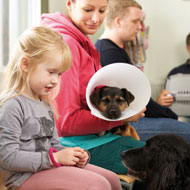
Study surveys veterinary practices across the UK
Cats and dogs undergoing veterinary visits could benefit from music and separate waiting rooms, according to new research.
The advice comes after experts at Hartpury University assessed the methods used by UK veterinary practices to help reduce anxiety in pets waiting for treatment.
The team surveyed 45 veterinary practices across the UK and found that the majority did not provide access to more than one waiting room.
Furthermore, the researchers found that many did not play music for their patients awaiting treatment, despite knowing the potential benefits.
Dr Tamara Montrose said: “The majority of practices surveyed fed treats to animals during veterinary visits, offered rehearsal visits to animals and their owners, used appeasing pheromones in the practice and stated that they used correct handling techniques for different species during consultations.
“Most of the practices acknowledged that separate waiting rooms, rehearsal visits, treat feeding, appeasing pheromones, sensory enrichment and correct handling can reduce stress in animals during veterinary visits.
“However, the majority of practices surveyed did not have more than one waiting room or use an auditory device to try and reduce stress in animals during veterinary visits.”
Researchers say that greater consideration should be given to facilitate the separation of species when it is not feasible to have separate waiting rooms.
“Implementing appointments for cats and dogs on different days and times would be beneficial,” Dr Montrose continued.
“In addition, veterinary staff should consider utilising classical or specially designed species-specific music in the veterinary practice as this may help mitigate the stress of cats and dogs visiting the practice.”


 Veterinary practices are being urged to help owners safely dispose of any unused and expired pet medicines - not just antibiotics - during November's Animal Medicines Amnesty.



