
Your data on MRCVSonline
The nature of the services provided by Vision Media means that we might obtain certain information about you.
Please read our Data Protection and Privacy Policy for details.

In addition, (with your consent) some parts of our website may store a 'cookie' in your browser for the purposes of
functionality or performance monitoring.
Click here to manage your settings.
If you would like to forward this story on to a friend, simply fill in the form below and click send.

Your friend's email:
Your email:
Your name:
 
 
Send Cancel

Oral vaccines could help curb rabies spread - study
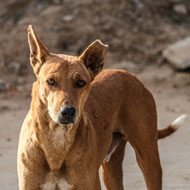
Researchers hope the study will help support the introduction of the oral rabies vaccination in India as an additional tool to eradicate the disease.

Three times as many dogs can be vaccinated each day

An oral rabies vaccine could provide a more efficient and cost-effective method of rabies control in countries with large stray dog populations, according to new research.

Writing in the journal Vaccine X, researchers assessed the effectiveness of oral vaccinations on dogs in Goa, India. Teams on mopeds searched for free-roaming dogs and delivered empty capsules hidden inside dog food.

The team found that three times as many dogs could be vaccinated each day when oral vaccination is combined with the current method. Each day, the team managed to reach 35 dogs, compared to just nine using the catch-vaccinate-release technique.

The study was conducted by experts from Mission Rabies, the Worldwide Veterinary Service and the University of Edinburgh.  

Some 59,000 people die annually from rabies and a further 29 million require costly treatment after being by bitten by dogs in countries where the disease is rife.

Researchers hope the study will help support the introduction of the oral rabies vaccination in India as an additional tool to eradicate the disease.

Mission Rabies founder Dr Luke Gamble, said: “Rabies has a massive impact on societies, not only from the disease but also from the fear that results. In many parts of the world, reaction to rabies cases fuels inhumane mass culls of dogs, which does nothing to combat the virus. We are showing that there is another way that benefits dogs, people and nations.”
 
Professor Mark Bronsvoort, of the University of Edinburgh’s Roslin Institute, said: “This kind of operational research is crucial in pushing the boundaries and finding a solution to the age-old problem of rabies. Dog populations vary, so it is essential that methods are evaluated methodically. We are excited that this approach could have far-reaching benefits.”

Become a member or log in to add this story to your CPD history

FIVP publishes CMA Compliance Checklist

News Story 1
 FIVP has published a CMA Compliance Checklist to support independent practices with the Market Investigation Order.

The document includes deadlines for small and large businesses, with tick boxes for each of the tasks. The organisation also invites practices to contact them for support with requirements.

Rita Dingwall, FIVP chair, said: FIVP appreciates that navigating the new CMA requirements can feel daunting. We hope this checklist will make things a little easier, helping independent practices work through what is required with confidence. 

Click here for more...
News Shorts
APHA launches free virtual work experience programme

The Animal and Plant Health Agency (APHA), in collaboration with Springpod, has launched a free virtual work experience programme, giving young people across the UK the chance to explore careers dedicated to protecting animal and plant health.

The on-demand programme offers a unique insight into career opportunities within APHA, showcasing how students can contribute to tackling some of the UK's most critical biosecurity and environmental challenges.

Designed for students aged 13 and over, the course includes more than 10 hours of engaging content featuring real-life industry insights, scenario-based challenges, and practical guidance on applying for jobs. To register for the course, visit the APHA website.

