


Leishmaniasis confirmed in untravelled UK dog
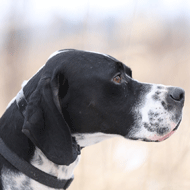
Increased importation of infected dogs into the UK makes incidental socialising with infected dogs more likely. (stock photo)
A UK dog with no history of foreign travel has been diagnosed with leishmaniasis, prompting concerns that the disease could become established in the UK - even in the absence of the sand fly vector.
According to a report in Vet Record letters, a fully vaccinated English pointer (not pictured) was presented to the Vets4Pets practice in Braintree, Essex, on four occasions between February 2016 and September 2017.
Initial dermatitis and alopecia was successfully treated with chlorhexidine shampoo and a tailored diet. However, the dog later presented with supperative and ulcerative interdigital dermatitis, with severe weight loss, lymphadenopathy and alopecia around the hind legs and head.
Fine needle aspirates revealed Leishmania amastigotes and quantitive serology confirmed an active infection.
While the dog had never travelled outside of the UK, or even outside the county of Essex, its owners had previously lived in Spain and travelled to the Jalón Vally without the patient in the summer of 2018.
This is the second reported case of an untravelled dog contracting leishmaniasis this year - but in this case the dog was not living with or in regular contact with another infected dog.
Writing in Vet Record, ESCCAP’s Ian Wright and Samantha Baker of Vets4Pets said it is more likely, therefore, that the most recent case is connected to the owners’ foreign travel. It is possible that infected sand flies were inadvertently brought back in the owners’ transport, luggage or clothes.
However, increased importation of infected dogs into the UK makes incidental socialising with infected dogs more likely.
They concluded: ‘This case demonstrates it cannot be assumed that because a dog has no history of foreign travel, leishmaniasis can be ruled out. It should still be considered as a differential in cases of weight loss, lymphadenopathy and ulcerative dermatitis in dogs.
‘It also serves as a reminder that we should not be complacent about the risk of Leishmania infantum establishing in the UK, even in the current absence of the sand fly vector.’


 Veterinary practices are being urged to help owners safely dispose of any unused and expired pet medicines - not just antibiotics - during November's Animal Medicines Amnesty.



