
Your data on MRCVSonline
The nature of the services provided by Vision Media means that we might obtain certain information about you.
Please read our Data Protection and Privacy Policy for details.

In addition, (with your consent) some parts of our website may store a 'cookie' in your browser for the purposes of
functionality or performance monitoring.
Click here to manage your settings.
If you would like to forward this story on to a friend, simply fill in the form below and click send.

Your friend's email:
Your email:
Your name:
 
 
Send Cancel

Gene mutation causes sight loss in dogs and humans
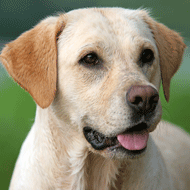
In healthy dogs, ABCA4 plays a vital role in the normal visual cycle when light hits the eye.
Study finds ABCA4 mutation causes retinal degenerative diseases 

Scientists have identified a genetic mutation that causes retinal degenerative diseases in both humans and dogs.

In children and young adults, Stargardt disease is one of the most common types of inherited retinal degenerative disease. Now, an international research team has found that a mutation in the ABCA4 gene causes a similar disease in Labrador retrievers.

Published in PLOS Genetics, the findings could help to breed healthy dogs and develop novel treatment for human patients.

Labradors can suffer from inherited conditions such as progressive retinal atrophy (PRA), which is caused by the degeneration of photoreceptor cells. In humans, this is called retinitis pigmentosa (RP).

Until now, only one mutation in the PRCD gene had been found to cause inherited retinal degeneration in Labradors. But 10 years ago a dog was found to have visual impairment not caused by the previously known mutation.

In healthy dogs, ABCA4 plays a vital role in the normal visual cycle when light hits the eye. According to the new findings, dogs affected by the mutation cannot produce a functional ABCA4 protein. Toxic byproducts produced when the photoreceptors detect light cause cell death and lead to visual impairment.

Mutations in the ABCA4 gene are the major case of Stargardt disease in humans, which affects around one in 8,000-10,000 children and young adults. Scientists say disease progression appears to be similar in Labradors.

Study director Tomas Bergström said: “We hope that the results of this study will not only support breeding of healthy dogs, but also enhance the development of new treatments for children and young adults with Stargardt disease.”

Become a member or log in to add this story to your CPD history

FIVP publishes CMA Compliance Checklist

News Story 1
 FIVP has published a CMA Compliance Checklist to support independent practices with the Market Investigation Order.

The document includes deadlines for small and large businesses, with tick boxes for each of the tasks. The organisation also invites practices to contact them for support with requirements.

Rita Dingwall, FIVP chair, said: FIVP appreciates that navigating the new CMA requirements can feel daunting. We hope this checklist will make things a little easier, helping independent practices work through what is required with confidence. 

Click here for more...
News Shorts
APHA launches free virtual work experience programme

The Animal and Plant Health Agency (APHA), in collaboration with Springpod, has launched a free virtual work experience programme, giving young people across the UK the chance to explore careers dedicated to protecting animal and plant health.

The on-demand programme offers a unique insight into career opportunities within APHA, showcasing how students can contribute to tackling some of the UK's most critical biosecurity and environmental challenges.

Designed for students aged 13 and over, the course includes more than 10 hours of engaging content featuring real-life industry insights, scenario-based challenges, and practical guidance on applying for jobs. To register for the course, visit the APHA website.

